Material HB Title
PC (Polycarbonate Anti-Static) LASER CUTTING OR MILLING

Material HB Description
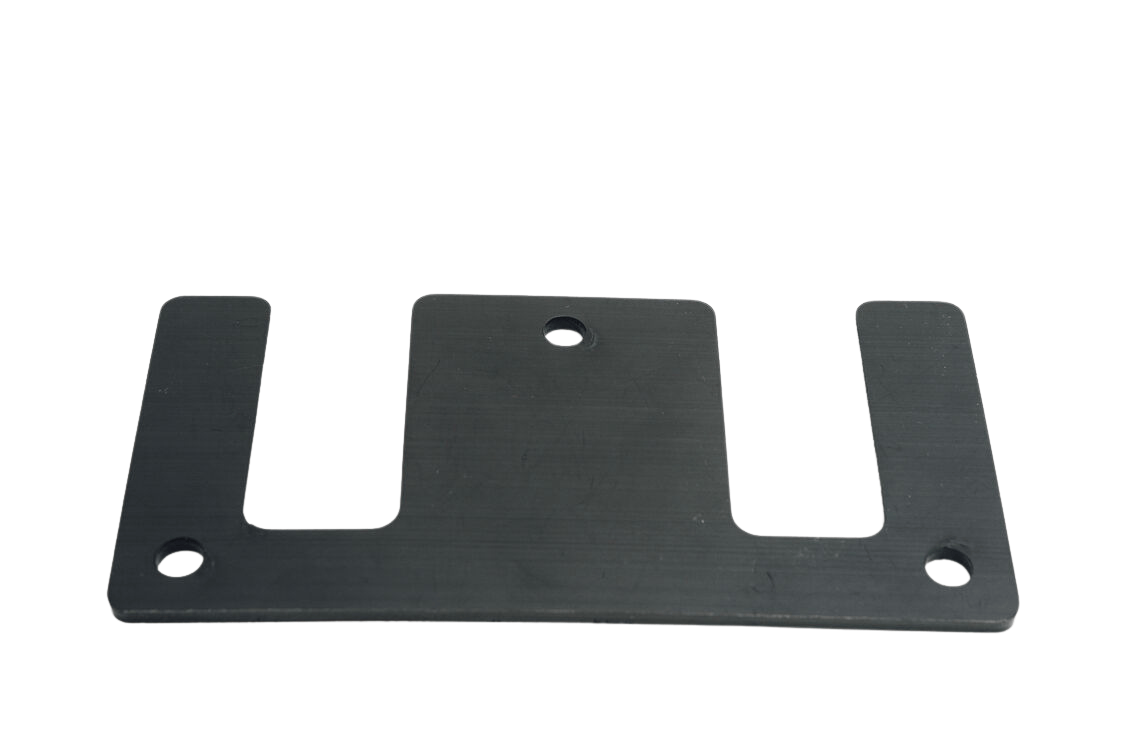
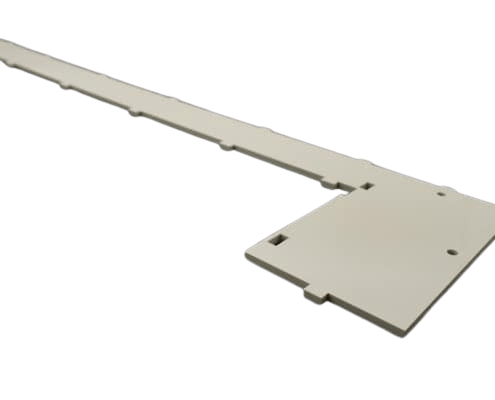
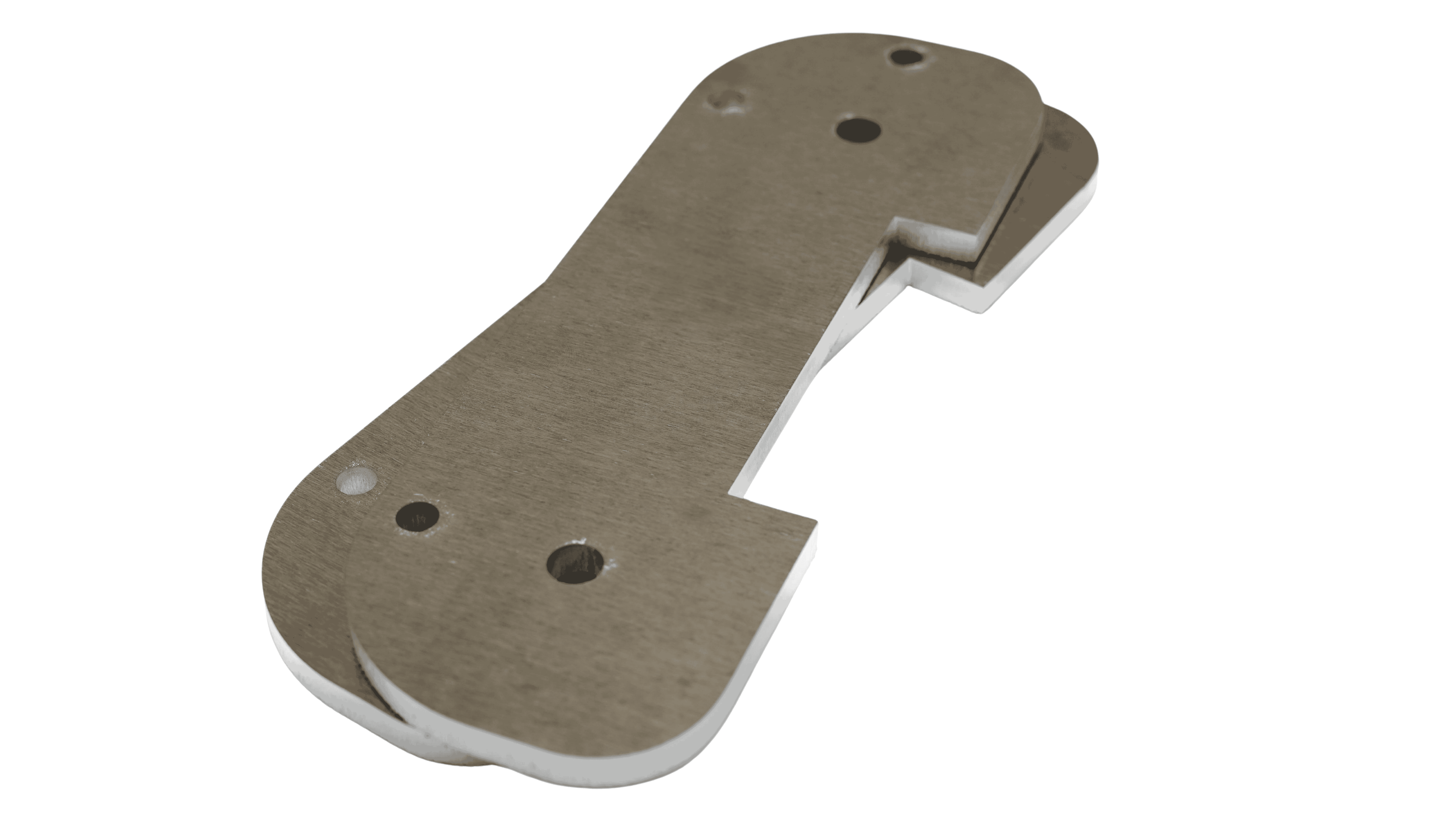
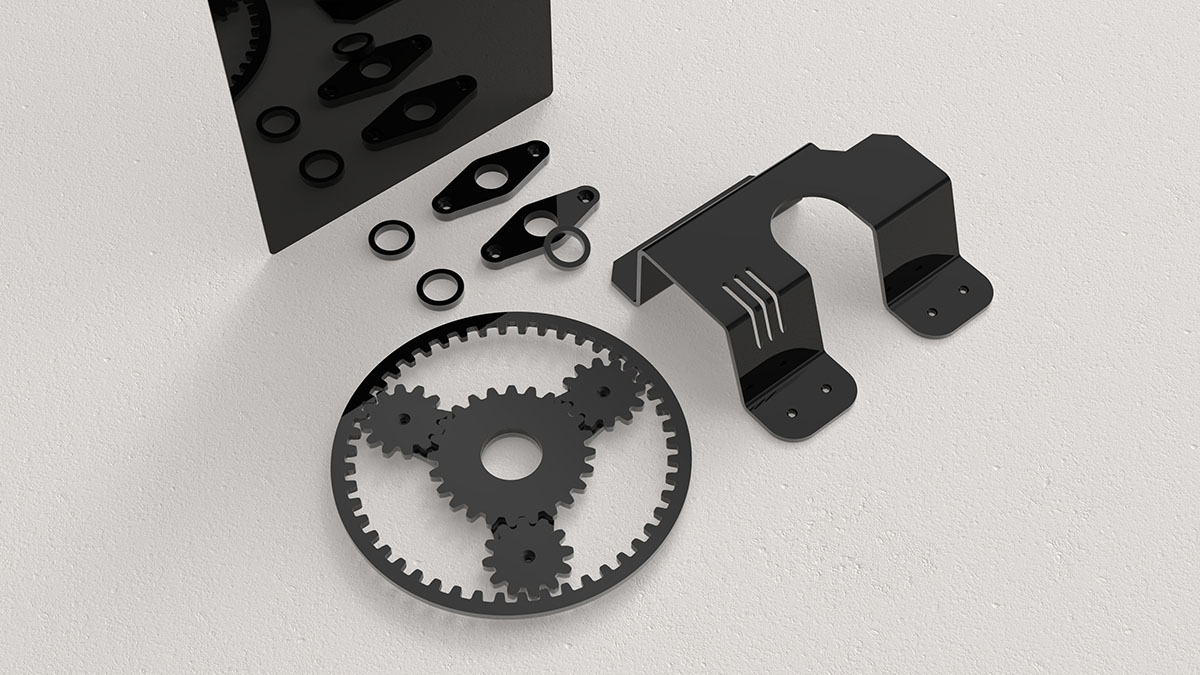
Discover PC (Polycarbonate Anti-Static) laser cutting or milling at CutWise.
CALCULATE PRICE DIRECTLY
Overview Text

PC (Polycarbonate Anti-Static)

Plastic

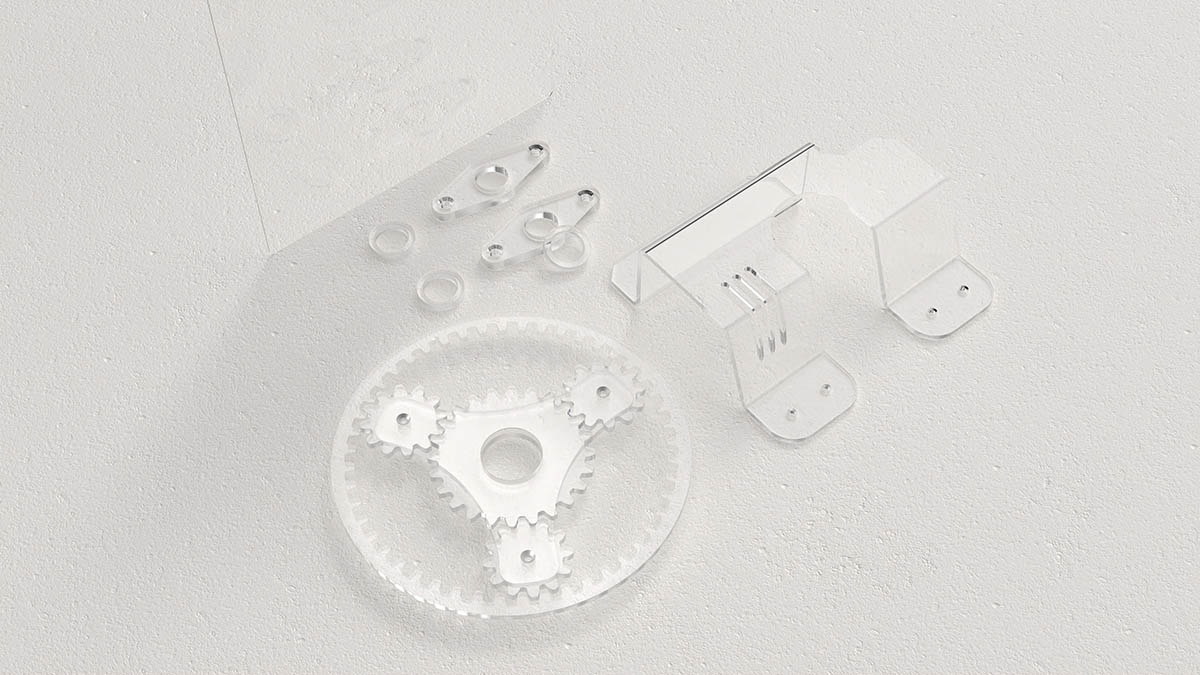
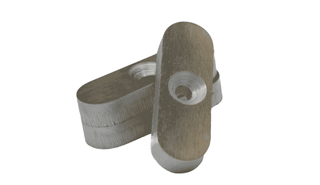
Polycarbonate Anti-Static is a transparent, impact-resistant plastic with a special surface treatment that prevents or dissipates electrostatic charges. This makes it ideal for applications where dust attraction, sparking, or electrostatic discharge (ESD) pose a risk. It combines the mechanical strength of standard polycarbonate with added protection for sensitive electronic components and cleanroom environments.
Well-known trade names for anti-static polycarbonate include Makrolon® AR ESD, Lexan™ ESD, and TIVAR® Cleanstat PC. These materials are widely used in the semiconductor industry, cleanrooms, and enclosures for electronic equipment.

  • Laser cutting
  • Milling
Calculate price directly

PC (Polycarbonate Anti-Static)

Properties of PC Anti-Static

  • Prevents electrostatic buildup (ESD-safe)
  • Very high impact resistance, even at low temperatures
  • Good optical clarity (light transmission up to approx. 85%)
  • Excellent resistance to breakage and cracking
  • Chemically resistant to oils and greases
  • Hard-coated surface reduces scratches and wear
  • Easy to machine: sawing, milling, bending
  • Can be thermoformed without losing ESD properties
  • Flame-retardant (UL 94 V-2 or better)

These combined properties of optical clarity, mechanical strength, and ESD protection make PC Anti-Static a popular choice for high-tech applications. Alternatives include ESD Acrylic or PET-G ESD, though these are less impact-resistant.

Datasheet Title
Technical properties of PC (Polycarbonate Anti-Static)

Product information and operations
Thickness Dimensions Color Laser cutting Milling Bending Glueable
Technical properties

General Properties

Density 1.20 g/cm³

Colour Transparent

Surface Resistivity 10⁶ – 10⁹ Ohm

Mechanical Properties

Modulus of Elasticity 2,300 MPa

Tensile Strength 60 MPa

Elongation at Break 6%

Impact Strength (Charpy, unnotched) >60 kJ/m²

Electrical Properties

Volume Resistivity 10⁶ – 10⁹ Ω·cm

Dielectric Constant (1 MHz) 2.9

Dielectric Strength 16 kV/mm

Thermal Properties

Thermal Conductivity 0.20 W/m·K

Linear Expansion Coefficient 0.065 mm/m·K

Heat Deflection Temperature 135 °C

Temperature Range

Continuous Use Temperature -40 °C to +120 °C

Applications of PC (Polycarbonate Anti-Static)

Enclosures for electronic equipment

Machine covers in ESD-sensitive environments

Protective panels in cleanrooms

Transport trays for printed circuit boards

Lab dividers and barriers

Display windows in semiconductor production

Test and measurement equipment

Fume hoods in chemical or medical settings

Frequently Asked Questions about PC (Polycarbonate Anti-Static)

What are the advantages of anti-static PC over standard polycarbonate?

Anti-static PC prevents electrostatic buildup, which is crucial in environments with sensitive electronics or cleanroom requirements. Standard PC does not offer this protection.

Can anti-static PC be laser cut?

Yes, thin sheets can be laser cut, but milling generally provides better results without discoloration or edge burning.
Do the ESD properties wear off over time?

With permanent anti-static coatings, ESD properties are long-lasting as long as the surface is properly maintained and not damaged.

Is anti-static PC UV-resistant?

Most variants have a UV-resistant coating, but prolonged outdoor exposure is not recommended unless specifically rated for it.

Can the material be bent or thermoformed?

Yes, anti-static PC is thermoplastic and can be thermoformed without losing its ESD properties, provided the process is controlled.

What are good alternatives to PC Anti-Static?

Depending on your application, PET-G ESD, PVC ESD, or ESD Acrylic could be considered. Each has different mechanical and thermal characteristics.

How scratch-resistant is the surface?

Thanks to the hard coating, the surface is more scratch-resistant than standard PC, though not completely scratch-proof like glass.

Is the material suitable for food contact?

No, anti-static PC is typically not certified for direct food contact due to the conductive coating applied to the surface.

HOW IT WORKS

Step
Upload

Upload your files

Upload your DXF, STEP, AI, or EPS file and start your order immediately.

Step
Sheet

Choose your material

Select from plastic, rubber, steel, stainless steel, or aluminum for your part.

Step
Document

Receive a quote within 10 seconds

After the quote, choose the desired delivery time that fits your schedule.

Step
Laser

Production

Ordered? We start production at the right moment for your delivery.

Step
Shipping

Delivery

Follow each step in real time, from production to delivery, for complete transparency.

Discover how CutWise works

Join thousands of companies using CutWise

Shell Honeywell Rolls Royce Volvo Siemens Tesla Philips
24/7 online laser cutting and milling
Quote in under 10 seconds
Order starting from 1 piece
ISO 9001:2015 certified
2000 m² machine park
150,000 parts per week
 

WHAT WILL YOU HAVE MADE TODAY?

CALCULATE PRICE NOW 

Material HB Title
HDPE Playtec® LASER CUTTING OR MILLING

Material HB Description
Discover HDPE Playtec® (High-Density Polyethylene) laser cutting or milling at CutWise.
CALCULATE PRICE DIRECTLY
Overview Text

HDPE Playtec® (High-Density Polyethylene)

Plastic

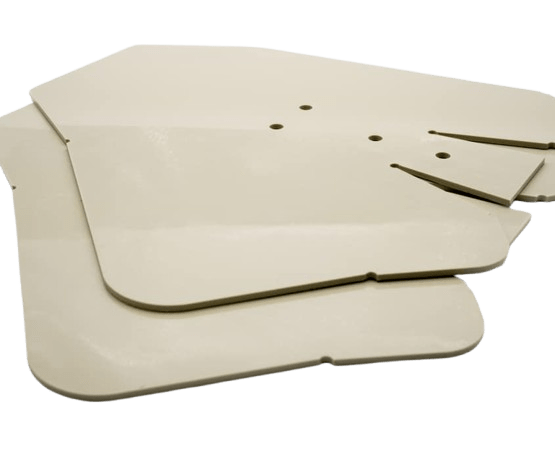
HDPE Playtec® is an impact-resistant and colorfast plastic sheet, specially developed for applications that require durability, aesthetics, and weather resistance. Thanks to its co-extruded surface layers, this material maintains its color and finish even after prolonged exposure to sunlight, rain, or heavy use.
Playtec® is a brand-name variant of HDPE, widely used in playgrounds, signage, and machine construction. With its layered core and surface design, it offers excellent machinability and dimensional stability.

  • Laser cutting
  • Milling
Calculate price directly

HDPE (High-Density Polyethylene)

Properties of HDPE Playtec®

  • Excellent UV and weather resistance
  • Highly impact-resistant and vandal-proof
  • Low maintenance and easy to clean
  • Colorfast due to multilayer construction
  • Food-safe and chemically resistant
  • Maintains properties even at low temperatures
  • Available in vivid color combinations
  • Ideal for engraving (core layer becomes visible)
  • Long-lasting alternative to painted or coated materials

Thanks to these properties, HDPE Playtec® is especially popular in applications where visual appeal, durability, and easy processing are essential.

Datasheet Title
Technical properties of HDPE Playtec®

Product information and operations
Thickness Dimensions Color Laser cutting Milling Bending Glueable
Technical properties

General Properties

Color Various (colored core and surface layers)

Density 0.96 g/cm³

Surface Matte / textured

Food-safe Yes

Mechanical Properties

Impact resistance Very high

Elongation at break >600%

Elastic modulus Approx. 900 MPa

Electrical Properties

Insulating capacity Good

Surface resistance >10¹³ Ω

Thermal Properties

Thermal conductivity 0.42 W/m·K

Linear thermal expansion 1.5–2.0 × 10⁻⁴ 1/K

Temperature Range

Min. temperature -50 °C

Max. temperature +80 °C

Applications of HDPE Playtec®

Outdoor playground equipment and panels

Signage and public information boards

Advertising displays and branding panels

Machine covers and workstation surfaces

Interior cladding in public spaces

Food-safe worktops and cutting surfaces

Cabin and paneling in marine or yacht interiors

Industrial panels with decorative or visual function

Frequently Asked Questions about HDPE Playtec®

What’s the difference between Playtec® and standard HDPE?

Playtec® is a co-extruded HDPE sheet with contrasting core and surface layers, making it ideal for engraving and decorative applications. It also offers better colorfastness and wear resistance compared to standard HDPE.

Is Playtec® suitable for outdoor use?

Yes, Playtec® is UV-resistant, weatherproof, and retains its color and finish even after years of outdoor exposure.

Can this material be laser cut?

In theory yes, but HDPE tends to melt quickly and may emit fumes when lasered. Milling or engraving is the preferred method for clean, precise results.

Is the material safe for use around children?

Yes, it is food-safe, splinter-free, and resistant to vandalism. That’s why it’s often used in playgrounds, schools, and public facilities.

Can HDPE Playtec® be engraved?

Absolutely. The contrasting core makes engraved designs highly visible, which is ideal for signage, labels, and decorative elements.

Is Playtec® chemically resistant?

Yes, it is resistant to many acids, bases, and cleaning agents, making it suitable for hygienically demanding environments.

What is the operating temperature range of Playtec®?

It performs reliably between -50 °C and +80 °C, making it suitable for both cold outdoor and mildly heated environments.

Is Playtec® a sustainable material?

Yes, it is durable, low-maintenance, and long-lasting. Its extended service life and recyclability make it a more sustainable alternative to painted or coated sheet materials.

HOW IT WORKS

Step
Upload

Upload your files

Upload your DXF, STEP, AI, or EPS file and start your order immediately.

Step
Sheet

Choose your material

Select from plastic, rubber, steel, stainless steel, or aluminum for your part.

Step
Document

Receive a quote within 10 seconds

After the quote, choose the desired delivery time that fits your schedule.

Step
Laser

Production

Ordered? We start production at the right moment for your delivery.

Step
Shipping

Delivery

Follow each step in real time, from production to delivery, for complete transparency.

Discover how CutWise works

Join thousands of companies using CutWise

Shell Honeywell Rolls Royce Volvo Siemens Tesla Philips
24/7 online laser cutting and milling
Quote in under 10 seconds
Order starting from 1 piece
ISO 9001:2015 certified
2000 m² machine park
150,000 parts per week
 

WHAT WILL YOU HAVE MADE TODAY?

CALCULATE PRICE NOW 

Material HB Title
PMMA (PLEXIGLASS) LASER CUTTING OR MILLING

Material HB Description
Discover PMMA (Plexiglas/Acrylic) laser cutting or milling at CutWise.
CALCULATE PRICE DIRECTLY
Overview Text

PMMA (Acrylaat / Plexiglas)

Plastic

PMMA, in full polymethyl methacrylate, is a transparent thermoplastic known for its crystal-clear appearance and high scratch resistance. This material is a popular alternative to glass: it is lighter, stronger, UV-resistant and easy to work with. PMMA is widely used in applications where clarity, aesthetics and weather resistance are important. 
Well-known trade names of PMMA include Plexiglas®, Altuglas®, Perspex® and Setacryl®.

  • Laser-cutting
  • Milling

Calculate price directly

PMMA (Plexiglas) voorbeeld

Properties of PMMA

  • Very high light transmission (up to 92%) – brighter than glass
  • Lightweight: approx. 50% lighter than glass
  • Good UV and weather resistance; does not yellow in the sun
  • More impact-resistant than glass (but more brittle than polycarbonate)
  • Easy to process: sawing, milling, drilling, bending
  • Available in clear, opaque, colored or extruded forms
  • Highly suitable for laser and CNC machining
  • Smooth finish and high scratch resistance
  • Not suitable for high-impact applications

These properties make PMMA an excellent material for visual applications indoors and outdoors.

Datasheet Title
Technical properties of PMMA

Product information and operations
Thickness Dimensions Color Laser cutting Milling Bending Glueable
Technical properties

General properties

Density 1,19 g/cm³

Colour Transparent, coloured, opal

Water absorption 0,3%

Temperature range

Minimum operating temperature -40°C

Maximum operating temperature +80°C

Mechanical properties

Tensile strength 70 MPa

Modulus of elasticity 3300 MPa

Impact strength (Charpy) 15–20 kJ/m²

Electrical properties

Dielectric strength > 25 kV/mm

Volume resistivity > 10¹⁵ Ω·cm

Thermal properties

Specific heat 1470 J/kg·K

Thermal conductivity 0,19 W/m·K

Linear expansion coefficient 7·10⁻⁵ /K

Applications of PMMA

Illuminated signage and displays

Glass panels, showcases, and protective covers

Nameplates and wayfinding signage

Furniture design and interior applications

Machine guards and protective housings

Lighting fixtures and diffusers

Roofs, canopies, and windbreaks

Aquariums and transparent structures

Frequently Asked Questions about PMMA

What is the difference between PMMA and polycarbonate?

PMMA is more transparent and scratch-resistant but less impact-resistant than polycarbonate. Choose PMMA where optical clarity is critical; choose PC for high-impact applications.

Can PMMA be used outdoors?

Yes PMMA is highly UV-resistant and does not yellow, making it ideal for outdoor uses like façade lettering, canopies, or billboards.

Is PMMA food-safe?

Yes many PMMA grades are approved for food contact. Check the certification for the specific sheet.

Can PMMA be bent?

Yes PMMA can be thermally bent. Cold bending is possible but requires a larger bend radius to avoid cracking.

Is PMMA scratch-sensitive?

PMMA is harder and more scratch-resistant than most plastics, though not as hard as glass. You can apply a protective coating for extra scratch resistance.

How is PMMA machined?

PMMA can be sawn, milled, drilled, polished, and laser-cut. Laser cutting yields a smooth, glossy edge.

Is PMMA recyclebaar?

Yes PMMA is highly recyclable. Reclaimed PMMA is often reused in the production of new sheets. Cast PMMA (GS) is stress-free, easier to machine, and more chemically resistant; extruded PMMA (XT) is more economical and offers tighter thickness tolerances.

What alternatives exist for high-impact applications?

For higher impact resistance, polycarbonate (PC) or PMMA-PC co-polymer are suitable alternatives.

HOW IT WORKS

Step
Upload

Upload your files

Upload your DXF, STEP, AI, or EPS file and start your order immediately.

Step
Sheet

Choose your material

Select from plastic, rubber, steel, stainless steel, or aluminum for your part.

Step
Document

Receive a quote within 10 seconds

After the quote, choose the desired delivery time that fits your schedule.

Step
Laser

Production

Ordered? We start production at the right moment for your delivery.

Step
Shipping

Delivery

Follow each step in real time, from production to delivery, for complete transparency.

Discover how CutWise works

Join thousands of companies using CutWise

Shell Honeywell Rolls Royce Volvo Siemens Tesla Philips
24/7 online laser cutting and milling
Quote in under 10 seconds
Order starting from 1 piece
ISO 9001:2015 certified
2000 m² machine park
150,000 parts per week
 

WHAT WILL YOU HAVE MADE TODAY?

CALCULATE PRICE NOW 

Material HB Title
PEEK LASER CUTTING OR MILLING

Material HB Description
Discover PEEK (Polyetheretherketone) laser cutting or milling at CutWise.
CALCULATE PRICE DIRECTLY
Overview Text

PEEK (Polyetheretherketone)

Plastic

PEEK, short for Polyetheretherketone, is a high-performance thermoplastic with excellent mechanical and chemical properties, combined with a high melting point and low wear. This material performs even at high temperatures and under heavy loads.
Well-known trade names for PEEK include: Victrex® PEEK, Solvay Ketaspire® PEEK and Evonik Vestakeep® PEEK.

  • Laser cutting
  • Milling

Calculate price directly

PEEK (Polyetheretherketone)

Properties of PEEK

  • Continuous temperature resistance up to 250 °C, peak up to 310 °C
  • Exceptional mechanical strength and stiffness
  • Very high wear resistance, even at high temperatures
  • Chemically resistant to almost all organic and inorganic substances
  • Flame-retardant and self-extinguishing (UL94 V-0)
  • Low outgassing and high purity, suitable for vacuum and cleanroom applications
  • Excellent dimensional stability and low creep
  • Good electrical insulation, even at high temperatures
  • Suitable for food contact and medical applications (depending on grade)

These properties make PEEK the material of choice for demanding applications in aerospace, medical technology, and the oil and gas industry. Alternatives include PPS (Polyphenylene Sulfide) or PEI (Polyetherimide).

Datasheet Title
Technical properties of PEEK

Product information and operations
Thickness Dimensions Color Laser cutting Milling Bending Glueable
Technical properties

General Properties

Density 1,30 g/cm³

Color Natural, black

Water Absorption 0,50%

Mechanical Properties

Tensile Strength 100 MPa

Modulus of Elasticity 3600 MPa

Elongation at Break 30%

Impact Strength (Charpy, unnotched) 8 kJ/m²

Electrical Properties

Specific Resistivity 2×10^17 Ω·cm

Dielectric Constant 3,2

Thermal Properties

Glass Transition Temperature (Tg) 143 °C

Melting Temperature 343 °C

Thermal Conductivity 0,25 W/(m·K)

Temperature Range -60 °C tot +260 °C

Applications of PEEK

Aircraft components (jet engines, interior linings)

Medical implants and surgical instruments

Semiconductor manufacturing parts

Oil & gas industry seals and gaskets

Automotive high-temperature components

Food-processing machinery (certification required)

Gears and bearings for heavy machinery

3D printing of functional prototypes

Frequently Asked Questions about PEEK

What makes PEEK different from standard plastics like PA or PP?

PEEK has a much higher melting point (343 °C), superior mechanical strength and chemical resistance, making it ideal for extreme conditions.

Is PEEK suitable for medical applications?

Yes, PEEK can be supplied biocompatible and is widely used for implants and surgical instruments.

What machining methods are possible for PEEK?

PEEK machines well by milling, turning, laser cutting and 3D printing. Post-processing can include polishing or smoothing saw cuts.

How does PEEK compare cost-wise?

PEEK is a high-end polymer with higher material costs than PA or PP, but its longer service life and performance often justify the premium.

Is PEEK affected by UV light?

Without additives, PEEK may discolor after prolonged UV exposure; UV-stabilized grades remain highly weather-resistant.

Is PEEK recyclable?

PEEK is a thermoplastic and can be recycled, but processing must be controlled to avoid contamination.

Can PEEK contact aggressive chemicals?

Yes, PEEK resists most acids, bases and organic solvents even at elevated temperatures.

What are alternatives for applications above 260 °C?

For higher temperature demands, ceramics or high-performance metals (e.g., Inconel alloys) are often more suitable.

HOW IT WORKS

Step
Upload

Upload your files

Upload your DXF, STEP, AI, or EPS file and start your order immediately.

Step
Sheet

Choose your material

Select from plastic, rubber, steel, stainless steel, or aluminum for your part.

Step
Document

Receive a quote within 10 seconds

After the quote, choose the desired delivery time that fits your schedule.

Step
Laser

Production

Ordered? We start production at the right moment for your delivery.

Step
Shipping

Delivery

Follow each step in real time, from production to delivery, for complete transparency.

Discover how CutWise works

Join thousands of companies using CutWise

Shell Honeywell Rolls Royce Volvo Siemens Tesla Philips
24/7 online laser cutting and milling
Quote in under 10 seconds
Order starting from 1 piece
ISO 9001:2015 certified
2000 m² machine park
150,000 parts per week
 

WHAT WILL YOU HAVE MADE TODAY?

CALCULATE PRICE NOW 

Material HB Title
HARD PVC LASER CUTTING OR MILLING

Material HB Description
Discover Hard PVC (Polyvinyl chloride, unplasticized) laser cutting or milling at CutWise.
CALCULATE PRICE DIRECTLY
Overview Text

Hard PVC (Polyvinyl chloride, unplasticized)

Plastic

Hard PVC, also known as unplasticized PVC (PVC-U), is a rigid, dimensionally stable plastic with excellent chemical resistance and electrical insulation properties. The material is self-extinguishing, easy to machine, and has a long service life, making it widely used in technical and industrial applications.
Well-known brand names include Trovidur®, Simona® PVC-U, and Geon®.

  • Laser cutting
  • Milling

Calculate price directly

Hard PVC

Properties of Hard PVC

  • High mechanical strength and stiffness
  • Excellent chemical resistance to acids, bases, and salts
  • Good electrical insulation properties
  • Self-extinguishing and flame-retardant
  • Low moisture absorption and good dimensional stability
  • Easy to process: sawing, milling, gluing, and welding
  • Lightweight material
  • Weather-resistant, including UV (with additives)
  • Cost-effective and durable

Thanks to these properties, Hard PVC is a popular choice for a wide range of technical applications.

Datasheet Title
Technical properties of Hard PVC

Product information and operations
Thickness Dimensions Color Laser cutting Milling Bending Glueable
Technical properties

Algemeen

Dichtheid 1,38 g/cm³

Kleur Grijs, wit, zwart

Oppervlakteafwerking Glad, mat

Temperatuurbereik

Minimale gebruikstemperatuur -15°C

Maximale gebruikstemperatuur +80°C

Mechanisch

Treksterkte 50–60 MPa

Elasticiteitsmodulus 3.000–3.500 MPa

Slagvastheid (Charpy) 2–5 kJ/m²

Elektrisch

Diëlektrische sterkte ≥ 40 kV/mm

Oppervlakteweerstand 10¹³–10¹⁴ Ω

Thermische eigenschappen

Warmtegeleidingscoëfficiënt 0,14–0,28 W/m·K

Lineaire uitzettingscoëfficiënt 80 × 10⁻⁶ /K

Applications of Hard PVC

Chemical storage tanks and piping systems

Electrical cable trays and insulators

Machine and equipment construction

Air ducts and ventilation systems

Façade cladding and building profiles

Laboratory furniture and worktops

Water and sewer pipes

Signage and displays

Frequently Asked Questions about Hard PVC

What is the difference between Hard PVC and Soft PVC?

Hard PVC (PVC-U) is unplasticized—stiff and dimensionally stable. Soft PVC contains plasticizers, making it flexible. Hard PVC is used for structural applications, while Soft PVC is suitable for hoses, cable jackets, and other flexible products.

Is Hard PVC suitable for outdoor use?

Yes, Hard PVC resists weathering and UV, making it ideal for long-term exterior installations.

Can Hard PVC be welded?

Yes, Hard PVC welds well with hot-air or solvent welding, enabling complex fabrication.


Is Hard PVC chemically resistant?

Yes, Hard PVC resists a wide range of chemicals, including acids, bases, and salts, making it perfect for chemical-processing equipment.

Is Hard PVC fire-safe?

Hard PVC is self-extinguishing and flame-retardant, meeting various fire-safety standards.

In what thicknesses and formats is Hard PVC available?

Hard PVC sheets come in 1 mm to 50 mm thicknesses and various sheet sizes, depending on the supplier.

Can Hard PVC be recycled?

Yes, Hard PVC is fully recyclable and can be reused in new applications.


How is Hard PVC processed?

Hard PVC is easy to machine with standard tools: sawing, milling, drilling, and bonding are all straightforward.

HOW IT WORKS

Step
Upload

Upload your files

Upload your DXF, STEP, AI, or EPS file and start your order immediately.

Step
Sheet

Choose your material

Select from plastic, rubber, steel, stainless steel, or aluminum for your part.

Step
Document

Receive a quote within 10 seconds

After the quote, choose the desired delivery time that fits your schedule.

Step
Laser

Production

Ordered? We start production at the right moment for your delivery.

Step
Shipping

Delivery

Follow each step in real time, from production to delivery, for complete transparency.

Discover how CutWise works

Join thousands of companies using CutWise

Shell Honeywell Rolls Royce Volvo Siemens Tesla Philips
24/7 online laser cutting and milling
Quote in under 10 seconds
Order starting from 1 piece
ISO 9001:2015 certified
2000 m² machine park
150,000 parts per week
 

WHAT WILL YOU HAVE MADE TODAY?

CALCULATE PRICE NOW 

Material HB Title
ABS LASER CUTTING OR MILLING

Material HB Description
Discover ABS (Acrylonitrile-Butadiene-Styrene) laser cutting or milling at CutWise.
CALCULATE PRICE DIRECTLY
Overview Text

ABS (Acrylonitrile-Butadiene-Styrene)

Plastic

ABS is a versatile engineering plastic known for its good impact resistance, stiffness, and formability. The material is easy to machine, glue, weld, and thermoform. ABS combines the best properties of three polymers, making it a widely used solution in machinery, automotive, electronics, and consumer products.
Well-known trade names for ABS include Terluran®, Novodur®, ABSOLAC®, and Cycolac®. These grades are often chosen for structural and functional parts with high design freedom.

  • Laser cutting
  • Milling

Calculate price directly

ABS (Acrylonitrile-Butadiene-Styrene)

Properties of ABS

  • Good impact resistance, even at low temperatures
  • High stiffness and dimensional stability
  • Excellent for gluing and welding
  • Easy to thermoform and bend
  • Smooth, aesthetic surface finish
  • Moisture resistant with relatively low water absorption
  • Available in various colors and versions (UV-resistant, flame-retardant)
  • Limited chemical resistance, especially to solvents
  • Not food-safe in standard form

Thanks to its combination of strength, processability, and aesthetics, ABS is highly suitable for both technical and visual applications.

Datasheet Title
Technical properties of ABS

Product information and operations
Thickness Dimensions Color Laser cutting Milling Bending Glueable
Technical properties

General

Specific Gravity 1,04 g/cm³

Moisture Absorption (standard climate) 0,4 %

Flammability B2

Specific Heat Capacity 1,3 kj/Kg°C

Temperature Range

Minimum Service Temperature -40°C

Maximum Service Temperature +75°C

Mechanical

Tensile Strength 41 N/mm

Elongation at Break 45 %

E-Modulus 2100 N/mm²

Flexural Strength 70 N/mm²

Impact Strength 37 Charpy

Shore or Ball Indentation Hardness 78 Shore °D

Coefficient of Friction 0,6

Electrical

Relative Permittivity (Dielectric Constant) 2,8 / 100 Hz

Dielectric Loss Factor 0,016 / tan(..x10⁻³)

Volume Resistivity 10 / 16 Ω cm

Surface Resistivity 10 / 13 Ω

Comparative Tracking Index (CTI) >600 KC

Dielectric Strength 20 kV/mm

Thermal

Crystalline Melting Point 130 °C

Thermal Conductivity 0,25 W/m°K

Coefficient of Linear Thermal Expansion 0,1 mm/m°C

Continuous Service Temperature (unloaded) -50 / +75 °C

Maximum Short-Term Service Temperature 90 °C

Heat Deflection Temperature (HDT) 80 °C

Applications of ABS

Housings for electronic and electrotechnical equipment

Panels and interior trim in vehicles

Protective covers and enclosures in machinery

Models and prototypes (including 3D printing)

Packaging and transport containers

Displays and promotional elements

Cases, containers, and storage systems

General-purpose technical parts for indoor use

Frequently Asked Questions about ABS

Can ABS be laser-cut?

ABS can be cut with CO₂ lasers, but be aware it may discolor or melt—milling is often preferable for precise edges.

Is ABS suitable for outdoor use?

Standard ABS is not UV-resistant. For exterior applications, use UV-stabilized grades to avoid weathering.

Is ABS food-safe?

No, standard ABS is not food-grade. For food-contact applications, choose certified materials like PE or PP.


Can ABS be bonded?

Yes, ABS bonds well with solvent-based adhesives, and it can also be welded or thermally joined.


How chemical-resistant is ABS?

ABS resists many acids and bases but is vulnerable to solvents such as acetone.

What are alternatives to ABS?
  • For higher impact resistance: polycarbonate (PC)
  • For better chemical resistance: POM or PP
  • For greater dimensional stability: PMMA
Is ABS recyclable?

Yes, ABS is readily recyclable and is commonly reused when properly sorted.


Can ABS be easily molded or printed?

Yes, ABS is ideal for thermoforming and is widely used in FDM 3D printing.


HOW IT WORKS

Step
Upload

Upload your files

Upload your DXF, STEP, AI, or EPS file and start your order immediately.

Step
Sheet

Choose your material

Select from plastic, rubber, steel, stainless steel, or aluminum for your part.

Step
Document

Receive a quote within 10 seconds

After the quote, choose the desired delivery time that fits your schedule.

Step
Laser

Production

Ordered? We start production at the right moment for your delivery.

Step
Shipping

Delivery

Follow each step in real time, from production to delivery, for complete transparency.

Discover how CutWise works

Join thousands of companies using CutWise

Shell Honeywell Rolls Royce Volvo Siemens Tesla Philips
24/7 online laser cutting and milling
Quote in under 10 seconds
Order starting from 1 piece
ISO 9001:2015 certified
2000 m² machine park
150,000 parts per week
 

WHAT WILL YOU HAVE MADE TODAY?

CALCULATE PRICE NOW 

Material HB Title
HMPE-1000 LASER CUTTING OR MILLING

Material HB Description
Discover HMPE-1000 (UHMW-PE 1000) laser cutting or milling at CutWise.
CALCULATE PRICE DIRECTLY
Overview Text

HMPE-1000 (UHMW-PE 1000)

Plastic

HMPE-1000, fully ultra-high-molecular-weight polyethylene, is an extremely wear-resistant and tough plastic with excellent sliding properties. The material withstands heavy mechanical loads, absorbs virtually no moisture, and is suitable for use at low temperatures. HMPE-1000 excels in applications where friction, wear, and impact play a crucial role.
Well-known trade names for HMPE-1000 include Tivar® 1000, Polystone® M, and Hostalen® GUR 4120. These grades are widely used in bulk handling, machinery construction, and the food industry.

  • Laser cutting
  • Milling

Calculate price directly

HMPE-1000 (UHMW-PE 1000)

Properties of HMPE-1000

  • Very high wear resistance under abrasive loads
  • Exceptional impact resistance, even down to -200 °C
  • Low coefficient of friction, excellent sliding performance
  • Resistant to moisture, corrosion, and bacterial growth
  • Food-safe (FDA and EU compliant in natural color)
  • Resistant to chemicals and cleaning agents
  • Sound and vibration damping
  • Self-lubricating, ideal for moving parts
  • Easy to machine, weld, and thermoform

Thanks to its outstanding performance in dynamic and abrasive applications, HMPE-1000 is the preferred choice for demanding industries.

Datasheet Title
Technical properties of HMPE-1000

Product information and operations
Thickness Dimensions Color Laser cutting Milling Bending Glueable
Technical properties

General

Specific Gravity 0,95 g/cm³

Moisture Absorption (standard climate) < 0,05 %

Flammability B 2

Temperature Range

Minimum Service Temperature -100°C

Maximum Service Temperature +80°C

Mechanical

Tensile Strength 36 N/mm

Elongation at Break 300 %

E-Modulus 1350 N/mm²

Flexural Strength 40 N/mm²

Impact Strength 50 Charpy

Shore or Ball Indentation Hardness 64 Shore °D

Coefficient of Friction 0,25

Electrical

Relative Permittivity (Dielectric Constant) 2,3 / 100 Hz

Dielectric Loss Factor >10 / 16 Ω cm

Comparative Tracking Index (CTI) >600 KC

Thermal

Crystalline Melting Point 130-135 °C

Thermal Conductivity 0,38 W/m°K

Coefficient of Linear Thermal Expansion 0,15 mm/m°C

Continuous Service Temperature (unloaded) -100/80 °C

Maximum Short-Term Service Temperature 120 °C

Heat Deflection Temperature (HDT) 60 °C

Applications of HMPE-1000

Wear strips and slide profiles in conveyor systems

Wear guards and bump rails in machinery

Lining of silos, hoppers, and chutes

Guide rails and star wheels in the food industry

Wear parts in recycling and packaging lines

Snowplow blades and liners in dump bodies

Wear plates in sorting systems

Anti-stick and sliding components in bulk handling

Frequently Asked Questions about HMPE-1000

What is the difference between HMPE-1000 and HMPE-500?

HMPE-1000 has a higher molecular weight, giving it superior wear resistance and a smoother surface than HMPE-500. For high-sliding-load applications, HMPE-1000 is preferred.

Can HMPE-1000 be laser cut?

Although laser cutting is technically possible, milling or sawing is recommended due to the material’s low laser absorption.

Is HMPE-1000 food-contact safe?

Yes, the natural (white) and blue grades comply with FDA and EU food-contact regulations and are widely used in food processing and conveyor lines.


How wear-resistant is HMPE-1000?

The material is extremely wear-resistant and performs excellently under abrasive or sliding loads.

Is HMPE-1000 UV-resistant?

Standard HMPE has limited UV resistance; for outdoor use, UV-stabilized or black grades are recommended.

Can HMPE-1000 withstand low temperatures?

Yes, it remains tough and impact-resistant down to –200 °C, making it suitable for cold-storage and outdoor applications.


How does HMPE-1000 compare to other sliding materials?

HMPE-1000 outperforms POM or PA in wear resistance, but it is less dimensionally stable and more difficult to bond.

Can HMPE-1000 be bonded?

No, HMPE has very low surface energy and is difficult to bond; mechanical fastening or welding is recommended.


HOW IT WORKS

Step
Upload

Upload your files

Upload your DXF, STEP, AI, or EPS file and start your order immediately.

Step
Sheet

Choose your material

Select from plastic, rubber, steel, stainless steel, or aluminum for your part.

Step
Document

Receive a quote within 10 seconds

After the quote, choose the desired delivery time that fits your schedule.

Step
Laser

Production

Ordered? We start production at the right moment for your delivery.

Step
Shipping

Delivery

Follow each step in real time, from production to delivery, for complete transparency.

Discover how CutWise works

Join thousands of companies using CutWise

Shell Honeywell Rolls Royce Volvo Siemens Tesla Philips
24/7 online laser cutting and milling
Quote in under 10 seconds
Order starting from 1 piece
ISO 9001:2015 certified
2000 m² machine park
150,000 parts per week
 

WHAT WILL YOU HAVE MADE TODAY?

CALCULATE PRICE NOW 

Material HB Title
PP (Polypropylene) LASER CUTTING OR MILLING

Material HB Description
Discover PP (Polypropylene) laser cutting or milling at CutWise.
CALCULATE PRICE DIRECTLY
Overview Text

PP (Polypropylene)

Plastic

Polypropylene (PP) is a versatile and chemically resistant plastic widely used in the technical industry. The material is lightweight, tough, easy to process, and offers excellent chemical and electrical properties. Thanks to its good balance between stiffness and flexibility, PP is widely applied in both structural and protective applications.
Well-known trade names for PP include Hostalen®, Moplen®, Daplen®, and Novolen®. These grades are often used in mechanical engineering, chemical industry, water treatment, and the food industry.

  • Laser cutting
  • Milling

Calculate price directly

PP (Polypropylene)

Properties of PP

  • Lightweight plastic with good impact resistance
  • Excellent chemical resistance, even to acids and alkalis
  • Low water absorption, suitable for moist and wet environments
  • Good electrical insulator
  • Suitable for welding and thermoforming
  • Food-safe in various grades (FDA / EU compliant)
  • Temperature resistant up to approx. 100 °C continuously
  • Resistant to mechanical loads at low density
  • Recyclable and environmentally friendly alternative to other plastics

Thanks to its chemical resistance, low cost, and versatility, PP is a popular choice for technical and industrial applications.

Datasheet Title
Technical properties of PP (Polypropylene)

Product information and operations
Thickness Dimensions Color Laser cutting Milling Bending Glueable
Technical properties

General

Specific Gravity 0,91 g/cm³

Moisture Absorption under Standard Climate <0,2 %

Flammability B2

Specific Heat Capacity 2 kj/Kg°C

Temperature Range

Minimum Service Temperature 0°C

Maximum Service Temperature +100°C

Mechanical

Tensile Strength 30 N/mm

Elongation at Break >70 %

E-Modulus 1150 N/mm²

Flexural Strength 28 N/mm²

Impact Strength 7 Charpy

Shore or Ball Indentation Hardness 70 Shore °D

Coefficient of Friction 0,3

Electrical

Relative Permittivity (Dielectric Constant) 2,1 / 100 Hz

Dielectric Loss Factor 0,0003 / tan(..x10⁻³)

Volume Resistivity >10 Ω cm

Surface Resistivity >10 Ω

Comparative Tracking Index (CTI) >600 KC

Dielectric Strength 58 kV/mm

Thermal

Crystalline Melting Point 160-165 °C

Thermal Conductivity 0,22 W/m°K

Coefficient of Linear Thermal Expansion 0,16 mm/m°C

Continuous Service Temperature (unloaded) -0 / 100 °C

Maximum Short-Term Service Temperature 140 °C

Heat Deflection Temperature (HDT) 65 °C

Applications of PP (Polypropylene)

Seals and chemical-resistant parts

Water tanks and storage systems

Laboratory and medical equipment

Lightweight machine parts and protective covers

Guide rails and conveyor components

Food-safe cutting boards and packaging

Housings for electrical components

Structural parts in water treatment and drainage

Frequently Asked Questions about PP (Polypropylene)

What are the main advantages of PP?

PP is lightweight, tough, chemically resistant, easy to machine, and food-safe—combining performance with low cost.

Is PP suitable for food contact?

Yes, many PP grades are FDA- and EU-compliant and widely used in the food industry.

How resistant is PP to chemicals?

PP has excellent resistance to acids, alkalis, solvents, and salts, making it a staple in chemical processing equipment.

Is PP weldable?

Absolutely, PP welds very well with hot-air or mirror welding, ideal for custom fabrications.

Can PP be laser-cut?

Technically yes, but in practice milling or sawing is more common due to PP’s low laser absorption.

Is PP UV-resistant?

Standard PP has limited UV resistance; for outdoor use, carbon-black filled or UV-stabilized grades are recommended.

How does PP compare to PE?

PP is stiffer and more heat-resistant than PE, but slightly less impact-resistant at low temperatures.

What are alternatives to PP for higher mechanical demands?

For greater stiffness or dimensional stability, consider materials like POM or PA (nylon).

HOW IT WORKS

Step
Upload

Upload your files

Upload your DXF, STEP, AI, or EPS file and start your order immediately.

Step
Sheet

Choose your material

Select from plastic, rubber, steel, stainless steel, or aluminum for your part.

Step
Document

Receive a quote within 10 seconds

After the quote, choose the desired delivery time that fits your schedule.

Step
Laser

Production

Ordered? We start production at the right moment for your delivery.

Step
Shipping

Delivery

Follow each step in real time, from production to delivery, for complete transparency.

Discover how CutWise works

Join thousands of companies using CutWise

Shell Honeywell Rolls Royce Volvo Siemens Tesla Philips
24/7 online laser cutting and milling
Quote in under 10 seconds
Order starting from 1 piece
ISO 9001:2015 certified
2000 m² machine park
150,000 parts per week
 

WHAT WILL YOU HAVE MADE TODAY?

CALCULATE PRICE NOW 

Material HB Title
PA6 (Nylon) LASER CUTTING OR MILLING

Material HB Description
Discover PA6 (Nylon) laser cutting or milling at CutWise.
CALCULATE PRICE DIRECTLY
Overview Text

PA6 (Nylon)

Plastic

PA6, also known as Nylon 6, is a strong, tough, and versatile engineering polymer with excellent mechanical properties. The material combines high impact resistance, wear resistance, and good damping properties, making it widely used in mechanical engineering, automotive, and technical industries. PA6 is frequently used for sliding or wear components and is available in multiple variants, with or without fillers.
Well-known trade names of PA6 include Ertalon® 6 SA, Sustamid® 6, Tecamid® 6, and Nylatron® (with fillers). These grades are used worldwide for load-bearing components with a long service life.

  • Laser cutting
  • Milling

Calculate price directly

PA6 (Nylon)

Properties of PA6

  • High mechanical strength and stiffness
  • Excellent wear resistance, even under friction and sliding loads
  • Good damping properties and noise reduction
  • High impact resistance, even at low temperatures
  • Good chemical resistance to oils, fats, and fuels
  • Reasonable dimensional stability (note moisture absorption)
  • Good machinability and thermoformability
  • Available in glass- or molybdenum-filled variants
  • Food-safe variants available (FDA / EU)

Thanks to these properties, PA6 is an excellent choice for sliding and dynamically loaded parts in various industrial applications.

Datasheet Title
Technical properties of PA6

Product information and operations
Thickness Dimensions Color Laser cutting Milling Bending Glueable
Technical properties

General

Specific Gravity 1,14 g/cm³

Moisture Absorption under Standard Climate 3,5 %

Flammability HB

Specific Heat Capacity 1,7 kj/Kg°C

Temperature Range

Minimum Service Temperature -40°C

Maximum Service Temperature +80°C

Mechanical

Tensile Strength 80 N/mm

Elongation at Break 30 %

E-Modulus 3000 N/mm²

Flexural Strength 130 N/mm²

Impact Strength 3 Charpy

Shore or Ball Indentation Hardness 82 Shore °D

Coefficient of Friction 0,5

Electrical

Relative Permittivity (Dielectric Constant) 3,7 / 100 Hz

Dielectric Loss Factor 0,0027 tan(δ) x10⁻³

Volume Resistivity >10 Ω cm

Surface Resistivity >10 Ω

Comparative Tracking Index (CTI) >600 KC

Dielectric Strength 20 kV/mm

Thermal

Crystalline Melting Point 220 °C

Thermal Conductivity 0,23 W/m°K

Coefficient of Linear Thermal Expansion 0,07 mm/m°C

Continuous Service Temperature (unloaded) -40 / 80 °C

Maximum Short-Term Service Temperature 160 °C

Heat Deflection Temperature (HDT) 95 °C

Applications of PA6

Plain bearings and guides in machinery

Gears and chain guides

Wear plates and impact strips

Housings and structural components

Conveyor rollers and wheels

Seals and guide blocks

Components in the food industry

Technical parts in automotive and agricultural equipment

Frequently Asked Questions about PA6

What is the difference between PA6 and PA66?

PA6 has slightly lower crystallinity than PA66, making it tougher but less dimensionally stable. PA66 is stiffer and offers somewhat higher heat resistance.

Is PA6 suitable for food applications?

Yes, natural-color grades of PA6 are often FDA- and EU-compliant and suitable for food-processing use.

How well does PA6 handle moisture?

PA6 absorbs relatively high moisture (up to ~1.5%), which affects dimensional stability. For tight-tolerance parts, drying or an alternative like POM is recommended.

Is PA6 easy to machine?

Yes, PA6 machines very well by milling, turning, and drilling. It produces good chips and is ideal for secondary finishing.

Can PA6 be used outdoors?

PA6 has limited UV resistance. For outdoor use, UV-stabilized or black-pigmented grades are recommended.

What fillers are available for PA6?

Available variants include glass-filled (for higher stiffness), molybdenum disulfide-filled (for improved sliding), or oil-impregnated for self-lubrication.

Is PA6 suitable for dynamic loading?

Absolutely, PA6 excels in sliding and rolling applications thanks to its good wear resistance and damping behavior.

Can PA6 be laser-cut?

Although technically possible, milling or sawing is often more efficient due to potential discoloration or fumes when laser cutting.

HOW IT WORKS

Step
Upload

Upload your files

Upload your DXF, STEP, AI, or EPS file and start your order immediately.

Step
Sheet

Choose your material

Select from plastic, rubber, steel, stainless steel, or aluminum for your part.

Step
Document

Receive a quote within 10 seconds

After the quote, choose the desired delivery time that fits your schedule.

Step
Laser

Production

Ordered? We start production at the right moment for your delivery.

Step
Shipping

Delivery

Follow each step in real time, from production to delivery, for complete transparency.

Discover how CutWise works

Join thousands of companies using CutWise

Shell Honeywell Rolls Royce Volvo Siemens Tesla Philips
24/7 online laser cutting and milling
Quote in under 10 seconds
Order starting from 1 piece
ISO 9001:2015 certified
2000 m² machine park
150,000 parts per week
 

WHAT WILL YOU HAVE MADE TODAY?

CALCULATE PRICE NOW 

Material HB Title
PI (Polyimide) LASER CUTTING OR MILLING

Material HB Description
Discover PI (Polyimide) laser cutting or milling at CutWise.
CALCULATE PRICE DIRECTLY
Overview Text

PI (Polyimide)

Plastic

Polyimide (PI) is a high-performance plastic that excels under extreme thermal, mechanical, and chemical conditions. The material maintains its strength and dimensional stability at temperatures up to 300 °C and can withstand cryogenic temperatures down to -270 °C. Thanks to its low outgassing, high purity, and excellent wear resistance, PI is ideal for applications in aerospace, semiconductor manufacturing, and high-end mechanical engineering.
Well-known trade names for PI include Vespel®, TECASINT®, Duratron® PI, and Meldin®. These grades are used worldwide in sectors where maximum reliability is required.

  • Laser cutting
  • Milling

Calculate price directly

PI (Polyimide)

Properties of PI

  • Exceptional thermal stability (continuous up to 300 °C, peak up to 400 °C)
  • Very high mechanical strength and stiffness, even at high temperatures
  • Low outgassing and high purity, suitable for vacuum and cleanroom applications
  • Excellent wear resistance and low friction coefficient, even without lubrication
  • Resistant to radiation, chemicals, and solvents
  • Inherently flame-retardant (UL94 V-0)
  • Good electrical insulating properties
  • Resistant to cryogenic temperatures down to -270 °C
  • High dimensional stability and low creep, even under long-term load

This combination of properties makes PI one of the most reliable plastics for demanding industrial applications.

Datasheet Title
Technical properties of PI

Product information and operations
Thickness Dimensions Color Laser cutting Milling Bending Glueable
Technical properties

Général

Masse volumique 1,34 g/cm³

Absorption d’humidité (climat normal) 1,1 %

Comportement au feu V0

Capacité calorifique spécifique 1,04 kj/Kg°C

Plage de Températures

Température d’utilisation minimale -270°C

Température d’utilisation maximale +300°C

Mécanique

Résistance à la traction 116 N/mm

Allongement à la rupture 9 %

Module d’élasticité (E) 3600 N/mm²

Résistance à la flexion 170 N/mm²

Résistance aux chocs 4,9 Charpy

Dureté Shore ou Indentation bille 89 Shore °D

Coefficient de frottement 0,35

Électrique

Constante diélectrique relative 3,5 / 100 Hz

Facteur de pertes diélectriques 0,0001 tan(..x10⁻³)

Résistivité volumique >10 Ω cm

Résistivité de surface 10 Ω

Indice de cheminement (CTI) 380 KC

Rigidité diélectrique 20 kV/mm

Thermique

Conductivité thermique 0,22 W/m°C

Coefficient de dilatation thermique linéaire 0,05 mm/m°C

Température d’utilisation continue (sans charge) -270 / +300 °C

Température maximale d’utilisation (court terme) 450 °C

Température de fléchissement sous charge (HDT) 368 °C

Applications of PI

Precision insulators in the semiconductor industry

Wear-resistant bearings and plain bearings in vacuum environments

Components in cryogenic systems and aerospace applications

High-temperature seals and gaskets

Electrical insulators in power electronics

Components in medical devices and laboratory instruments

Structural parts in aviation and defense systems

Wear parts in high-end machinery and robotics

Frequently Asked Questions about PI

What makes PI suitable for extreme temperatures?

PI retains its mechanical and electrical properties from –270 °C to +300 °C thanks to its unique molecular structure.

Is PI suitable for vacuum environments?

Yes, PI has very low outgassing and high purity, making it ideal for vacuum and clean-room applications.

How does PI perform in wear resistance?

PI offers excellent wear resistance and a low coefficient of friction even without lubrication, making it ideal for moving parts under heavy load.

Is PI chemical-resistant?

Yes, PI resists most solvents, acids, and bases, allowing use in chemically aggressive environments.

Can PI be machined?

PI machines well by milling and turning with high precision, but due to its hardness and thermal properties it requires specialized tools and techniques.

Is PI flame-retardant?

Yes, PI is inherently flame-retardant and meets UL94 V-0 classification, making it suitable for fire-safety-critical applications.

What are alternatives to PI at lower temperatures?

For less extreme temperature requirements, materials like PEEK or PPS can offer a cost-effective alternative.

In what forms is PI available?

PI is available in sheets, rods, tubes, and as film, depending on the application and requirements.

HOW IT WORKS

Step
Upload

Upload your files

Upload your DXF, STEP, AI, or EPS file and start your order immediately.

Step
Sheet

Choose your material

Select from plastic, rubber, steel, stainless steel, or aluminum for your part.

Step
Document

Receive a quote within 10 seconds

After the quote, choose the desired delivery time that fits your schedule.

Step
Laser

Production

Ordered? We start production at the right moment for your delivery.

Step
Shipping

Delivery

Follow each step in real time, from production to delivery, for complete transparency.

Discover how CutWise works

Join thousands of companies using CutWise

Shell Honeywell Rolls Royce Volvo Siemens Tesla Philips
24/7 online laser cutting and milling
Quote in under 10 seconds
Order starting from 1 piece
ISO 9001:2015 certified
2000 m² machine park
150,000 parts per week
 

WHAT WILL YOU HAVE MADE TODAY?

CALCULATE PRICE NOW 

Subscribe to Plastic