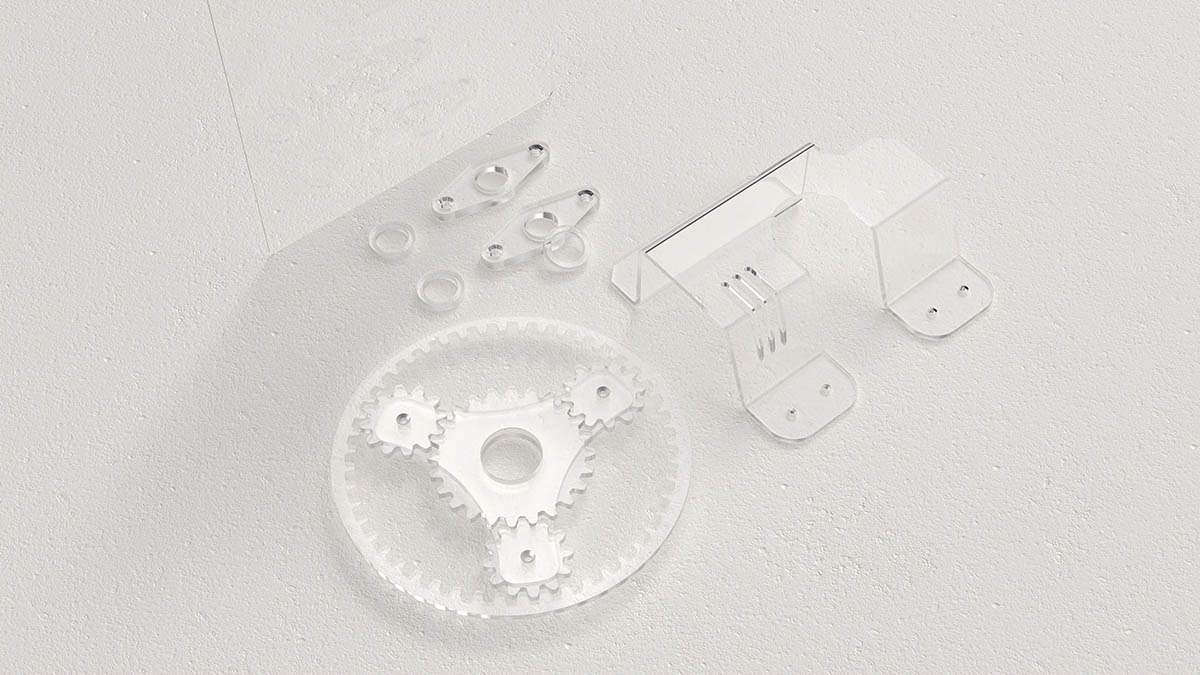
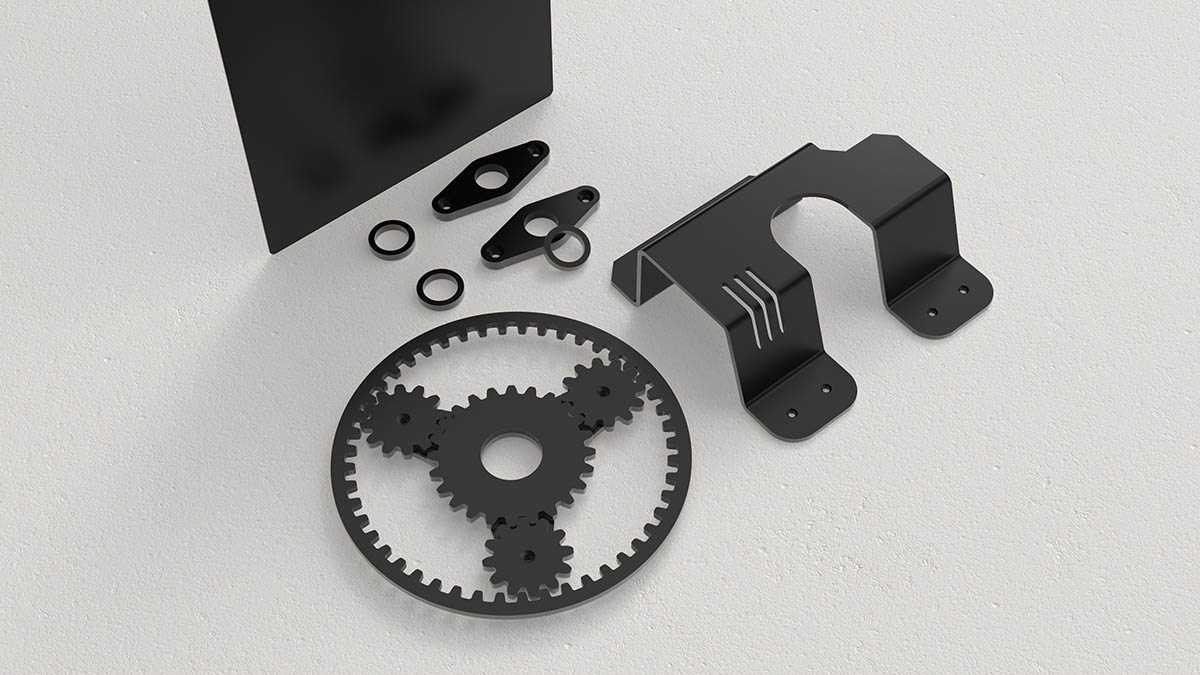
Material HB Title
PC (Polycarbonate) LASER CUTTING OR MILLING

Material HB Description
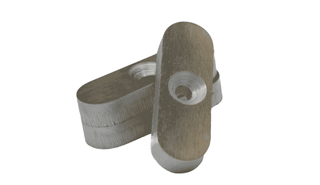
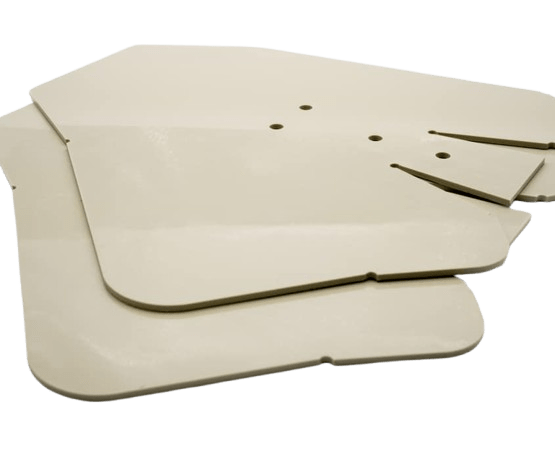
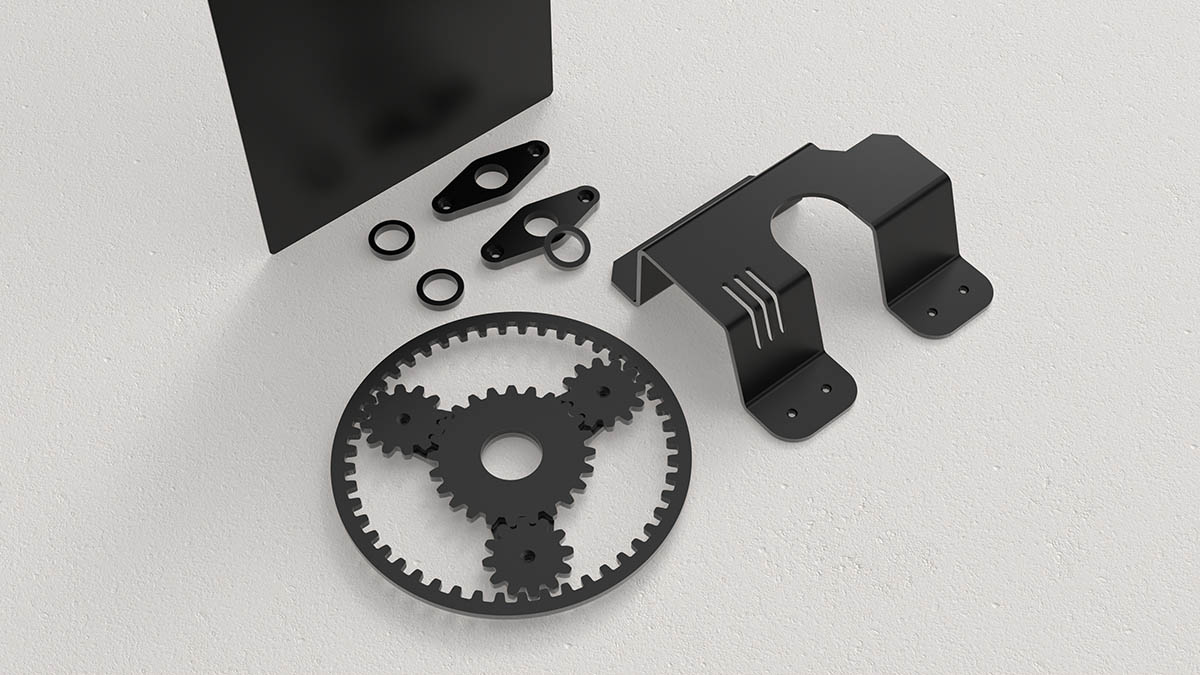
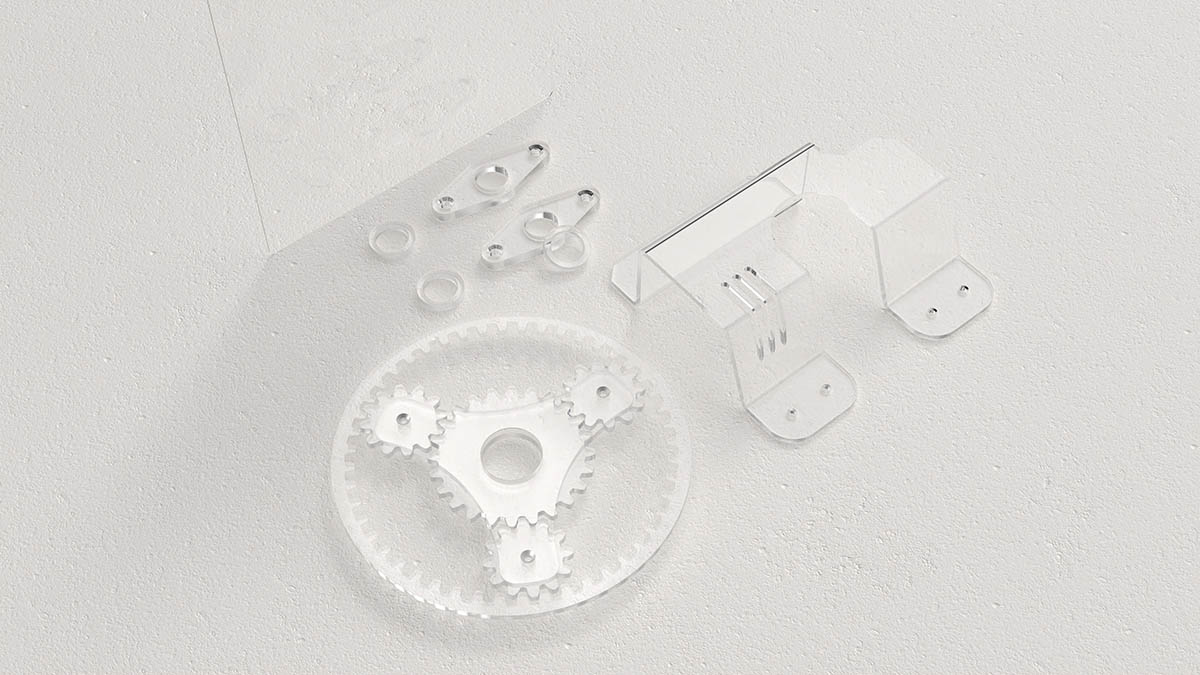
Discover PC (Polycarbonate) laser cutting or milling at CutWise.
CALCULATE PRICE DIRECTLY
Overview Text

PC (Polycarbonate)

Plastic

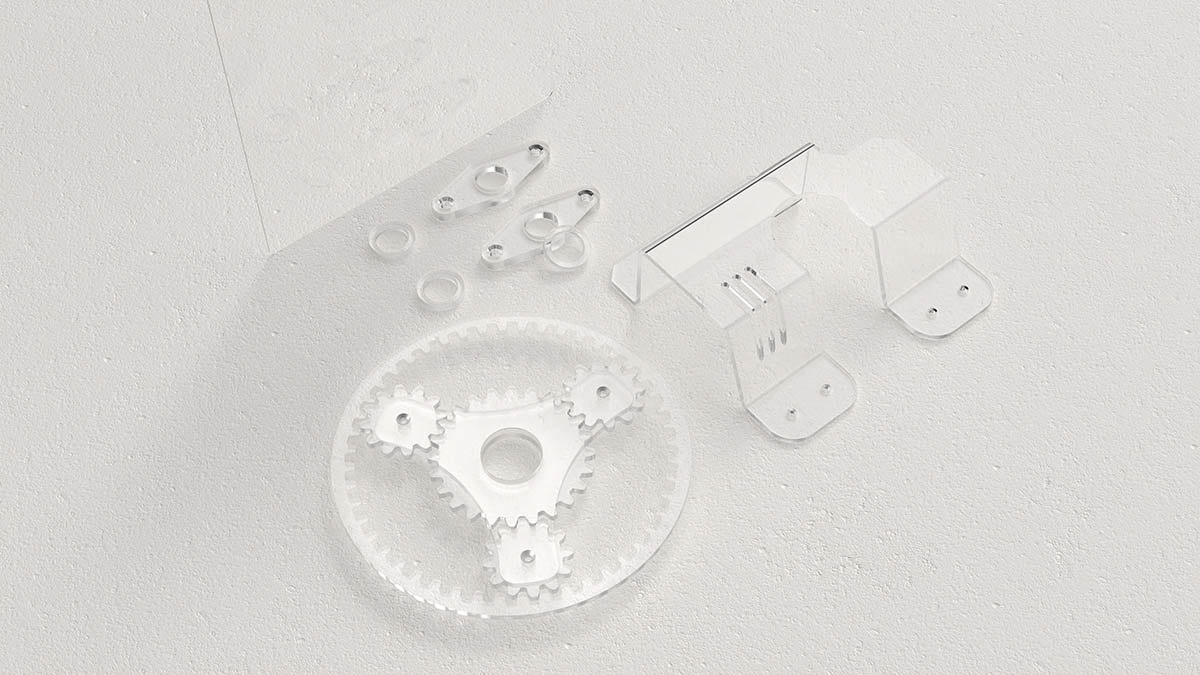
Polycarbonate (PC) is an extremely impact-resistant, transparent plastic that is up to 250 times stronger than glass. The material combines optical clarity with high thermal stability and is excellent for processing. PC is flame-retardant, self-extinguishing, and resistant to impact even at low temperatures. It is widely used as a safe alternative to glass in both technical and architectural applications.
Well-known trade names for polycarbonate include Lexan®, Makrolon®, and Palram®. These grades are used worldwide in sectors where safety, impact resistance, and transparency come together.

  • Laser cutting
  • Milling
Calculate price directly

PC (Polycarbonate)

Properties of polycarbonate

  • Very high impact resistance, up to 250x stronger than glass
  • High light transmission (~88%), clear and transparent
  • Self-extinguishing and flame-retardant (UL94 V-2 to V-0)
  • Resistant to continuous temperatures up to 120 °C
  • Dimensionally stable and easy to machine
  • Cold bendable without breaking
  • Impact resistant even at -40 °C
  • Good electrical insulator
  • Available in clear, opal, and UV-stabilized variants

Thanks to this unique combination of strength, transparency, and heat resistance, PC is a preferred material in mechanical engineering, safety applications, and the construction sector.

Datasheet Title
Technical properties of PC (Polycarbonate)

Product information and operations
Thickness Dimensions Color Laser cutting Milling Bending Glueable
Technical properties

General

Specific Gravity 1,2 g/cm³

Moisture Absorption under Standard Climate 0,2 %

Flammability B1

Specific Heat Capacity 1,17 kj/Kg°C

Temperature Range

Minimum Service Temperature -30°C

Maximum Service Temperature +120°C

Mechanical

Tensile Strength 70 N/mm

Elongation at Break 100 %

E-Modulus 2500 N/mm²

Flexural Strength 70 N/mm²

Impact Strength 40 Charpy

Shore or Ball Indentation Hardness 80 Shore °D

Coefficient of Friction 0,39

Electrical

Relative Permittivity (Dielectric Constant) 3,0 / 100 Hz

Dielectric Loss Factor 0,0007 tan(..x10⁻³)

Volume Resistivity 10 Ω cm

Surface Resistivity 10 Ω

Comparative Tracking Index (CTI) 260/300 KC

Dielectric Strength 38 kV/mm

Thermal

Crystalline Melting Point 230 °C

Thermal Conductivity 0,21 W/m°C

Coefficient of Linear Thermal Expansion 0,07 mm/m°C

Continuous Service Temperature (unloaded) -30 / 120 °C

Maximum Short-Term Service Temperature 150 °C

Heat Deflection Temperature (HDT) 138 °C

Applications of PC (Polycarbonate)

Machine guards and safety covers

Impact-resistant glazing and windows (e.g., bus shelters, showcases)

Transparent protective panels and splash guards

Lampshades and lighting fixtures

Housings and covers for electronic devices

Shock-resistant parts in automotive and aerospace

Façade panels and roof glazings (UV-stabilized)

Medical applications and laboratory enclosures

Frequently Asked Questions about PC (Polycarbonate)

Is polycarbonate impact-resistant?

Yes, PC is one of the toughest plastics and won’t shatter on impact, making it ideal for safety applications.

Can polycarbonate be laser-cut?

Fine laser cutting is possible with specialized equipment, but milling is more common for thicker sheets and tight tolerances.

Is polycarbonate suitable for outdoor use?

Yes, provided you choose UV-stabilized grades. Standard PC will yellow under prolonged UV exposure.

Is polycarbonate better than plexiglass (PMMA)?

PC is much more impact-resistant and better at heat resistance, whereas PMMA is clearer and more scratch-resistant.

Can polycarbonate be cold-bent?

Yes, PC can be bent without preheating, making it ideal for applications requiring flexibility in shape.


Is polycarbonate flame-retardant?

Yes, polycarbonate has inherent flame-retardant properties and is available in various fire-ratings (e.g., UL94 V-0).


How machinable is polycarbonate?

PC machines well—milling, sawing, drilling, and bending are straightforward. Bonding and polishing require experience to avoid stress cracking.

Is polycarbonate food-safe?

Some grades are food-safe. Always request the appropriate certification for direct food contact applications.

HOW IT WORKS

Step
Upload

Upload your files

Upload your DXF, STEP, AI, or EPS file and start your order immediately.

Step
Sheet

Choose your material

Select from plastic, rubber, steel, stainless steel, or aluminum for your part.

Step
Document

Receive a quote within 10 seconds

After the quote, choose the desired delivery time that fits your schedule.

Step
Laser

Production

Ordered? We start production at the right moment for your delivery.

Step
Shipping

Delivery

Follow each step in real time, from production to delivery, for complete transparency.

Discover how CutWise works

Join thousands of companies using CutWise

Shell Honeywell Rolls Royce Volvo Siemens Tesla Philips
24/7 online laser cutting and milling
Quote in under 10 seconds
Order starting from 1 piece
ISO 9001:2015 certified
2000 m² machine park
150,000 parts per week
 

WHAT WILL YOU HAVE MADE TODAY?

CALCULATE PRICE NOW 

Material HB Title
PS (Polystyrene) LASER CUTTING OR MILLING

Material HB Description
Discover PS (Polystyrene) laser cutting or milling at CutWise.
CALCULATE PRICE DIRECTLY
Overview Text

PS (Polystyrene)

Plastic

Polystyrene (PS) is a thermoplastic polymer known for its clarity, rigidity, and cost-effectiveness. The material is lightweight, easy to process, and offers an excellent surface gloss. PS is available in both solid and foam forms, making it highly versatile for various industrial applications.
Well-known trade names of PS include Styron®, Novacor®, and Lustrex®. These grades are commonly used in the packaging industry, display technology, and household appliances.
  • Laser cutting
  • Milling

Calculate price directly

PS (Polystyrene)

Properties of PS

  • High light transmission (~90%), ideal for transparent applications
  • Lightweight and easy to handle
  • Excellent surface gloss and aesthetics
  • Good dimensional stability and shape retention
  • Easy to process: sawing, milling, drilling, and bonding
  • Suitable for thermoforming and vacuum forming
  • Food-safe in certain grades
  • Limited UV resistance; not recommended for long-term outdoor use
  • Relatively brittle; sensitive to impact loads

Thanks to these properties, PS is a popular choice for applications where aesthetics and cost-efficiency are important.

Datasheet Title
Technical properties of PS

Product information and operations
Thickness Dimensions Color Laser cutting Milling Bending Glueable
Technical properties

General

Specific Gravity 1,05 g/cm³

Moisture Absorption under Standard Climate 0,2 %

Flammability HB

Specific Heat Capacity 1,05 kj/Kg°C

Temperature Range

Minimum Service Temperature -50°C

Maximum Service Temperature +75°C

Mechanical

Tensile Strength 22 N/mm²

Elongation at Break 30 %

E-Modulus 2500 N/mm²

Flexural Strength 50 N/mm²

Impact Strength 30 Charpy

Shore or Ball Indentation Hardness 70 - 80 Shore °D

Coefficient of Friction 0,35

Electrical

Relative Permittivity (Dielectric Constant) 2,6 / 100 Hz

Dielectric Loss Factor 0,0001 - 0,0003 tan(..x10⁻³)

Volume Resistivity > 10^16 Ω cm

Surface Resistivity > 10^14 Ω

Comparative Tracking Index (CTI) >300 KC

Dielectric Strength 20 - 30 kV/mm

Thermal

Crystalline Melting Point 240 °C

Thermal Conductivity 0,15 - 0,20 W/m°C

Coefficient of Linear Thermal Expansion 70 - 80 mm/m°C

Continuous Service Temperature (unloaded) -50 / +75 °C

Maximum Short-Term Service Temperature 80 °C

Applications of PS

Displays and advertising boards

Packaging for food and electronics

Housings for household appliances

Lightboxes and lighting fixtures

Disposable tableware and cutlery

Model making and prototyping

Interior elements and decorative panels

Laboratory supplies and medical trays

Frequently Asked Questions about PS

Is PS suitable for outdoor use?

PS has limited UV resistance and may yellow or become brittle under prolonged sun exposure. For outdoor applications, UV-stabilized grades or alternatives like PMMA are recommended.

Can PS be laser-cut?

Yes, PS lasers cleanly with a sharp edge. Be aware of possible discoloration or odor during processing.

Is PS food-safe?

Certain PS grades are approved for food contact. Always verify the material’s specifications and certifications for food applications.

How does PS behave at high temperatures?

PS has a glass transition around 100 °C. Above this, it softens and may deform, so it’s unsuitable for high-heat applications.

Is PS recyclable?

Yes, PS is recyclable (recycling symbol #6), though local recycling options vary by region and product type.


What are alternatives to PS for higher impact resistance?

For greater toughness, materials such as ABS or polycarbonate are better choices.

Can PS be bonded?

Yes, PS bonds well with suitable solvent-based adhesives. Ensure surfaces are clean and dry for optimal adhesion.

Is PS suitable for thermoforming?

Absolutely, PS thermoforms and vacuum-forms excellently, which is why it’s popular in packaging.


HOW IT WORKS

Step
Upload

Upload your files

Upload your DXF, STEP, AI, or EPS file and start your order immediately.

Step
Sheet

Choose your material

Select from plastic, rubber, steel, stainless steel, or aluminum for your part.

Step
Document

Receive a quote within 10 seconds

After the quote, choose the desired delivery time that fits your schedule.

Step
Laser

Production

Ordered? We start production at the right moment for your delivery.

Step
Shipping

Delivery

Follow each step in real time, from production to delivery, for complete transparency.

Discover how CutWise works

Join thousands of companies using CutWise

Shell Honeywell Rolls Royce Volvo Siemens Tesla Philips
24/7 online laser cutting and milling
Quote in under 10 seconds
Order starting from 1 piece
ISO 9001:2015 certified
2000 m² machine park
150,000 parts per week
 

WHAT WILL YOU HAVE MADE TODAY?

CALCULATE PRICE NOW 

Material HB Title
PMMA XT LASER CUTTING OR MILLING

Material HB Description
Discover PMMA XT (Extruded Acrylic) laser cutting or milling at CutWise.
CALCULATE PRICE DIRECTLY
Overview Text

PMMA XT (Extruded Acrylic)

Plastic

PMMA XT, or extruded acrylic, is a transparent plastic with high clarity and excellent UV resistance. The material is lightweight, easy to process, and a popular alternative to glass. Thanks to the extrusion process, PMMA XT offers higher dimensional stability and is more cost-effective than cast PMMA, making it ideal for flat applications with standard tolerances.
Well-known trade names for PMMA XT include Altuglas®, Plexiglas® XT, Acryplast®, and Perspex® XT. These grades are widely used in advertising, interior design, construction, and mechanical engineering.

  • Laser cutting
  • Milling

Calculate price directly

PMMA XT (Extruded Acrylic)

Properties of PMMA XT

  • Excellent light transmission (up to 92%)
  • Crystal clear and optically attractive
  • UV resistant and does not yellow in sunlight
  • Lighter and more impact-resistant than glass
  • Very easy to machine and laser cut
  • Well-suited for bonding and thermoforming
  • High dimensional stability thanks to extrusion process
  • Weather-resistant
  • Available in transparent, opal, and colored variants

Thanks to this combination of optical quality and processability, PMMA XT is a favorite material for displays, panels, and protective screens for both indoor and outdoor applications.

Datasheet Title
Technical properties of PMMA XT

Product information and operations
Thickness Dimensions Color Laser cutting Milling Bending Glueable
Technical properties

General

Specific Gravity 1,19 g/cm³

Moisture Absorption under Standard Climate 0,5 %

Flammability B2

Specific Heat Capacity 1,32 kj/Kg°C

Temperature Range

Minimum Service Temperature -30°C

Maximum Service Temperature +80°C

Mechanical

Tensile Strength 74 N/mm

Elongation at Break 5 %

E-Modulus 3000 N/mm²

Flexural Strength 120 N/mm²

Impact Strength 10 Charpy

Shore or Ball Indentation Hardness 80 Shore °D

Coefficient of Friction 0,54

Electrical

Relative Permittivity (Dielectric Constant) 3,7 / 100 Hz

Dielectric Loss Factor 0,06 tan(..x10⁻³)

Volume Resistivity 10 Ω cm

Surface Resistivity 10 Ω

Comparative Tracking Index (CTI) 600 KC

Dielectric Strength 23 kV/mm

Thermal

Crystalline Melting Point 103 °C

Thermal Conductivity 0,19 W/m°C

Coefficient of Linear Thermal Expansion 0,07 mm/m°C

Continuous Service Temperature (unloaded) -30 / 80 °C

Maximum Short-Term Service Temperature 100 °C

Heat Deflection Temperature (HDT) 102 °C

Applications of PMMA XT

Machine guards and protective covers

Displays and product presentations

Advertising signs and light boxes

Interior cladding and furniture finishes

Façade lettering and router-cut letters

Windows for vehicles or cabins

Decorative panels and design applications

Cover plates and hygiene screens

Frequently Asked Questions about PMMA XT

What is the difference between PMMA XT and cast PMMA (GS)?

PMMA XT is extruded—offering more consistent thickness and lower cost. Cast PMMA (GS) has lower internal stress and is better suited for heavy machining like bonding and polishing.

Can PMMA XT be used outdoors?

Yes. It’s UV-resistant and does not yellow, remaining stable under prolonged sun exposure.

Is PMMA XT suitable for laser cutting?

Absolutely, laser cutting yields a smooth, polished edge. Be mindful, however, of internal stresses in thicker sections.


How impact-resistant is PMMA XT?

It’s about ten times more impact-resistant than glass but is more brittle than polycarbonate. For applications subject to heavy impacts, polycarbonate is recommended.

Is PMMA XT food-safe?

Not all grades are food-safe. For food-contact applications, request a certificate of food-safe compliance.

Can PMMA XT be bonded?

Yes, suitable acrylic adhesives work well, though improper bonding can introduce stress cracks.


Is PMMA XT bendable?

Yes, at 100–120 °C it can be thermoformed, making it suitable for warm bending and shaping.

Is PMMA XT scratch-resistant?

It’s harder than many plastics but can still scratch. For scratch-critical uses, consider surface coatings or hardened glass.

HOW IT WORKS

Step
Upload

Upload your files

Upload your DXF, STEP, AI, or EPS file and start your order immediately.

Step
Sheet

Choose your material

Select from plastic, rubber, steel, stainless steel, or aluminum for your part.

Step
Document

Receive a quote within 10 seconds

After the quote, choose the desired delivery time that fits your schedule.

Step
Laser

Production

Ordered? We start production at the right moment for your delivery.

Step
Shipping

Delivery

Follow each step in real time, from production to delivery, for complete transparency.

Discover how CutWise works

Join thousands of companies using CutWise

Shell Honeywell Rolls Royce Volvo Siemens Tesla Philips
24/7 online laser cutting and milling
Quote in under 10 seconds
Order starting from 1 piece
ISO 9001:2015 certified
2000 m² machine park
150,000 parts per week
 

WHAT WILL YOU HAVE MADE TODAY?

CALCULATE PRICE NOW 

Material HB Title
HMPE-500 LASER CUTTING OR MILLING

Material HB Description
Discover HMPE-500 (High Molecular Polyethylene) laser cutting or milling at CutWise.
CALCULATE PRICE DIRECTLY
Overview Text

HMPE-500 (High Molecular Polyethylene)

Plastic

HMPE-500, also known as UHMW-PE 500, is an abrasion-resistant and tough plastic with excellent sliding properties. This material is chemically resistant, shock-absorbing, and food-safe, making it ideal for applications in the food industry, transport engineering, and machinery. HMPE-500 combines high impact resistance with a low coefficient of friction, even at low temperatures. 
Well-known trade names for HMPE-500 include Tivar® 1000, Polystone® M, and Hostalen® GUR. These grades are widely used in wear-resistant and sliding components.

  • Laser cutting
  • Milling

Calculate price directly

HMPE-500 (High Molecular Polyethylene)

Properties of HMPE-500

  • Very high abrasion resistance, even under abrasive loads
  • Low coefficient of friction (excellent sliding properties)
  • High impact resistance, even at –200 °C
  • Resistant to most chemicals and cleaning agents
  • Food-safe according to FDA and EU guidelines
  • Excellent resistance to impact and mechanical shocks
  • Resistant to moisture, rot, and corrosion
  • Sound- and vibration-dampening
  • Easy to machine and weld

These properties make HMPE-500 ideally suited for wear plates, bumper strips, transport engineering, and applications where wear reduction and safety are paramount.

Datasheet Title
Technical properties of HMPE-500

Product information and operations
Thickness Dimensions Color Laser cutting Milling Bending Glueable
Technical properties

General

Density 0,95 g/cm³

Water absorption under normal climate < 0,05 %

Flammability B 2

Temperature range

Minimum operating temperature -100°C

Maximum operating temperature +80°C

Mechanical

Tensile strength 28 N/mm

Elongation at break 300 %

E-modulus 1350 N/mm²

Flexural strength 40 N/mm²

Impact strength 50 Charpy

Shore or ball indentation hardness 64 Shore °D

Coefficient of friction 0,25

Electrical

Relative permittivity (dielectric constant) 2,3 / 100 Hz

Volume resistivity >10 / 16 Ω cm

Comparative tracking index >600 KC

Thermal

Crystalline melting point 130-135 °C

Thermal conductivity 0,38 W/m°K

Linear thermal expansion coefficient 0,15 mm/m°C

Long-term service temperature (unloaded) -100/80 °C

Short-term maximum service temperature 120 °C

Heat deflection temperature 60 °C

Applications of HMPE-500

Slide plates and slide profiles in conveyor belts

Slide plates and slide profiles in conveyor belts

Lining of bunkers, hoppers, and silos

Guide rails and star wheels in packaging lines

Wear parts in machinery and recycling installations

Food-safe cutting boards and work surfaces

Wear plates in truck loading systems

Anti-adhesion surfaces for bulk materials

Frequently asked questions about HMPE-500

What is the difference between HMPE-500 and HMPE-1000?

HMPE-1000 (UHMW-PE 1000) has a higher molecular density and therefore better sliding properties and wear resistance. HMPE-500 is more economical and sufficient for many standard applications.

Can HMPE-500 be welded?

Yes, HMPE-500 is easily weldable with suitable PE welding techniques, such as butt-fusion or extrusion welding.

Is HMPE-500 suitable for food use?

Yes, HMPE-500 is easily weldable with suitable PE welding techniques, such as butt-fusion or extrusion welding.

Is HMPE-500 suitable for food use?

The standard white variant ages under UV light. Black or stabilized variants offer better UV resistance.

How well does HMPE resist wear?

HMPE-500 scores very well on wear resistance and is therefore widely used in sliding and impact parts.

Can HMPE-500 be used at low temperature?

Yes, the material remains tough and impact-resistant down to –200 °C, ideal for cooling systems and outdoor use.

Is HMPE-500 chemically resistant?

Yes, it resists most acids, alkalis, and solvents and is widely used in the chemical industry.

What are typical applications of HMPE-500?

Mainly in machine building, food processing, logistics, and bulk handling—wherever wear and sliding are factors.

HOW IT WORKS

Step
Upload

Upload your files

Upload your DXF, STEP, AI, or EPS file and start your order immediately.

Step
Sheet

Choose your material

Select from plastic, rubber, steel, stainless steel, or aluminum for your part.

Step
Document

Receive a quote within 10 seconds

After the quote, choose the desired delivery time that fits your schedule.

Step
Laser

Production

Ordered? We start production at the right moment for your delivery.

Step
Shipping

Delivery

Follow each step in real time, from production to delivery, for complete transparency.

Discover how CutWise works

Join thousands of companies using CutWise

Shell Honeywell Rolls Royce Volvo Siemens Tesla Philips
24/7 online laser cutting and milling
Quote in under 10 seconds
Order starting from 1 piece
ISO 9001:2015 certified
2000 m² machine park
150,000 parts per week
 

WHAT WILL YOU HAVE MADE TODAY?

CALCULATE PRICE NOW 

Material HB Title
PPS LASER CUTTING OR MILLING

Material HB Description
Discover PPS (Polyphenylene Sulfide) laser cutting or milling at CutWise.
CALCULATE PRICE DIRECTLY
Overview Text

PPS (Polyphenylene Sulfide)

Plastic

PPS is a high-performance engineering plastic known for its excellent chemical resistance, high temperature resistance, and mechanical strength. The material retains its shape and properties even under extreme conditions, making it ideal for applications in aerospace, automotive, and electronics. PPS is also flame retardant and highly dimensionally stable. 
Well-known trade names for PPS include Ryton®, Fortron®, Tecatron®, and Torlon® (in blends). These grades are often chosen for critical parts that are exposed to heat and aggressive chemicals for extended periods.

  • Laser cutting
  • Milling

Calculate price directly

PPS (Polyphenylene Sulfide)

Properties of PPS

  • Very high temperature resistance (up to 260 °C continuous)
  • Excellent chemical resistance, even to acids and alkalis
  • Flame retardant without addition of halogens
  • High dimensional stability and low thermal expansion
  • Good electrical insulating properties, even at high temperatures
  • Wear-resistant and hard material with low coefficient of friction
  • Minimal moisture absorption
  • Good resistance to creep and stress corrosion
  • Suitable for precision components in demanding environments

This combination of properties makes PPS a popular choice for applications where conventional plastics fall short.

Datasheet Title
Technical properties of PPS

Product information and operations
Thickness Dimensions Color Laser cutting Milling Bending Glueable
Technical properties

General

Density 0,93 g/cm³

Water absorption under normal climate <0,1 %

Flammability (thickness 3 mm / 6 mm) V2

Flammability (thickness 3–10 mm) B1

Temperature range

Minimum operating temperature -10°C

Maximum operating temperature +150°C

Mechanical

Yield strength >30 MPa

Elongation at break >50 %

Tensile modulus >1300 MPa

Notched impact strength >4 KJ/m²

Shore hardness >67 Schaal D

Electrical

Dielectric constant 2,4

Dissipation factor (10⁶ Hz) 0,00019

Volume resistivity > 10^14 Ω * cm

Surface resistivity > 10^14

Dielectric strength >30 KV/mm

Thermal

Melting temperature 162-167 °C

Thermal conductivity 0,20 W/m°K

Heat capacity 1,70 kJ/(kg*K)

Linear thermal expansion coefficient 120-190 / 10⁻⁶/K

Continuous service temperature 0-100 °C

Short-term service temperature (max.) 150 °C

Vicat softening temperature 81 °C

Applications of PPS

Parts in electronic connectors and housings

Sensor housings and insulators in automotive

Precision components in aerospace engineering

Precision components in aerospace engineering

Pump parts and valve bodies in the chemical industry

Components for electric motors and switchgear

Components for electric motors and switchgear

Insulating parts in high-frequency electronics

Frequently asked questions about PPS

Is PPS suitable for high temperatures?

Yes—PPS remains stable up to 260 °C and deforms minimally even under prolonged load.

What are the chemical properties of PPS?

PPS is highly resistant to acids, alkalis, solvents, and fuels—more so than most plastics.

Can PPS be milled?

Absolutely. PPS machines very well, yielding a clean surface finish and high dimensional accuracy.

Is PPS electrically insulating?

Yes—PPS has excellent dielectric properties, even at elevated temperatures or in humid conditions.

How does PPS differ from PEEK?

PPS is less expensive than PEEK and offers superior chemical resistance, but is somewhat more brittle and has lower impact strength.

Is PPS food-safe?

Some grades are FDA-approved; always verify the specification if you need food-contact certification.

Can PPS be used outdoors?

Although PPS is reasonably UV-resistant, it is typically protected or modified for long-term outdoor use.

What are typical applications for PPS?

Primarily in automotive, aerospace, and electronics, where temperature resistance, dimensional stability, and chemical resistance are crucial.

HOW IT WORKS

Step
Upload

Upload your files

Upload your DXF, STEP, AI, or EPS file and start your order immediately.

Step
Sheet

Choose your material

Select from plastic, rubber, steel, stainless steel, or aluminum for your part.

Step
Document

Receive a quote within 10 seconds

After the quote, choose the desired delivery time that fits your schedule.

Step
Laser

Production

Ordered? We start production at the right moment for your delivery.

Step
Shipping

Delivery

Follow each step in real time, from production to delivery, for complete transparency.

Discover how CutWise works

Join thousands of companies using CutWise

Shell Honeywell Rolls Royce Volvo Siemens Tesla Philips
24/7 online laser cutting and milling
Quote in under 10 seconds
Order starting from 1 piece
ISO 9001:2015 certified
2000 m² machine park
150,000 parts per week
 

WHAT WILL YOU HAVE MADE TODAY?

CALCULATE PRICE NOW 

Material HB Title
PET-P LASER CUTTING OR MILLING

Material HB Description
Discover PET-P (Polyethylene Terephthalate) laser cutting or milling at CutWise.
CALCULATE PRICE DIRECTLY
Overview Text

PET-P (Polyethylene Terephthalate)

Plastic

PET-P, also known as hard PET, is a strong, dimensionally stable engineering plastic with excellent sliding and wear properties. The material is particularly suitable for precision components that deform very little, even under prolonged load. PET-P is wear-resistant, moisture-resistant, and easily machinable, making it widely used in technical applications where dimensional accuracy is crucial. 
Well-known trade names for PET-P include Ertalyte®, Arnite®, Sustodur®, and Tecapet®. These high-quality PET plastics are often used in machine building and the food industry.

  • Laser cutting
  • Milling

Calculate price directly

PET-P (Polyethylene Terephthalate)

Properties of PET-P

  • High dimensional stability and accuracy
  • Low coefficient of friction and good wear resistance
  • High mechanical strength and stiffness
  • Resistant to moisture and hydrolysis
  • Good chemical resistance to oils, fats, and solvents
  • Food-safe (FDA-compliant for certain grades)
  • Low creep, even under continuous load
  • Good electrical insulating properties
  • Easy to machine and finish

Thanks to this balance of mechanical strength, stability, and machinability, PET-P is a popular choice for precise, wear-resistant components in demanding industrial applications.

Datasheet Title
Technical properties of PET-P

Product information and operations
Thickness Dimensions Color Laser cutting Milling Bending Glueable
Technical properties

General

Density 1,38 g/cm³

Moisture absorption under normal climate 0,2 %

Fire Behavior HB

Specific Heat Capacity 1,05 kj/Kg°C

Temperature Range

Minimum Service Temperature -20°C

Maximum Service Temperature +115°C

Mechanical

Tensile Strength 90 N/mm²

Elongation at Break 20 %

E-Modulus 3000 N/mm²

Flexural Strength 145 N/mm²

Impact Strength 2 Charpy

Shore or Ball Indentation Hardness 84 Shore °D

Coefficient of Friction 0,22

Electrical

Relative Permittivity (Dielectric Constant) 3,4 / 100 Hz

Dissipation Factor (Dielectric Loss Factor) 0,02 / tan(δ) x10⁻³

Volume Resistivity 10 / 16 Ω cm

Surface Resistivity 10 / 13 Ω

Comparative Tracking Index (CTI) 125 KC

Dielectric Strength 20 kV/mm

Thermal

Crystalline Melting Point 255 °C

Thermal Conductivity 0,28 W/m°K

Linear Thermal Expansion Coefficient 0,06 mm/m°C

Continuous Service Temperature (Unloaded, Long-Term) -20 / 115 °C

Maximum Service Temperature (Short-Term) 160 °C

Maximum Service Temperature (Short-Term) 80 °C

Applications of PET-P

Precision guides and sliding parts in machinery

Gears and rollers for conveyor systems

Components in the food industry

Insulators in electrical equipment

Seals and wear plates

Guide stars and bottle neck guides

Parts for medical devices

Spacers and fastening elements in electronics

Frequently Asked Questions about PET-P

How does PET-P differ from standard PET?

PET-P is a technically optimized grade with higher dimensional stability and wear resistance than standard PET, which is commonly used for packaging.

Is PET-P suitable for food-contact applications?

Yes, many PET-P grades (e.g., Ertalyte®) are FDA-certified and safe for food contact.


Can PET-P be milled or machined?

Absolutely, PET-P machines exceptionally well, yielding minimal stresses and high dimensional accuracy.


How moisture-resistant is PET-P?

PET-P has low moisture absorption and retains its mechanical properties even in humid environments.

What are alternatives to PET-P?

For higher-temperature use: PEEK. For lower cost with slightly less stability: POM.

Is PET-P electrically insulating?

Yes, it boasts good dielectric properties and is often used as an electrical insulator.


Can PET-P be used outdoors?

Prolonged UV exposure can cause discoloration and aging. For exterior use, choose UV-stabilized grades.

What are the most common PET-P uses?

Precision machine parts such as sliding blocks, bearings, and gears where wear resistance and stability are critical.

HOW IT WORKS

Step
Upload

Upload your files

Upload your DXF, STEP, AI, or EPS file and start your order immediately.

Step
Sheet

Choose your material

Select from plastic, rubber, steel, stainless steel, or aluminum for your part.

Step
Document

Receive a quote within 10 seconds

After the quote, choose the desired delivery time that fits your schedule.

Step
Laser

Production

Ordered? We start production at the right moment for your delivery.

Step
Shipping

Delivery

Follow each step in real time, from production to delivery, for complete transparency.

Discover how CutWise works

Join thousands of companies using CutWise

Shell Honeywell Rolls Royce Volvo Siemens Tesla Philips
24/7 online laser cutting and milling
Quote in under 10 seconds
Order starting from 1 piece
ISO 9001:2015 certified
2000 m² machine park
150,000 parts per week
 

WHAT WILL YOU HAVE MADE TODAY?

CALCULATE PRICE NOW 

Material HB Title
PTFE LASER CUTTING OR MILLING

Material HB Description
Discover PTFE (Teflon®) laser cutting or milling at CutWise.
CALCULATE PRICE DIRECTLY
Overview Text

PTFE (Teflon®)

Plastic

PTFE, better known by the brand name Teflon®, is a plastic distinguished by its exceptional chemical resistance and extremely low coefficient of friction. Thanks to its high temperature resistance and excellent insulating properties, PTFE is ideal for demanding environments. Moreover, the material is non-stick, making it widely used in technical applications where an anti-adhesion effect is required. 
Well-known trade names for PTFE include Teflon®, Dyneon™, Fluon®, and Hostaflon®. These variants are used worldwide for their reliable performance in industry.

  • Laser cutting
  • Milling

Calculate price directly

PTFE (Teflon®)

Properties of PTFE

  • Very high chemical resistance to almost all substances
  • Temperature resistant from –200 °C to +260 °C
  • Extremely low coefficient of friction (smooth surface)
  • Excellent electrical insulator
  • Non-stick and hydrophobic surface
  • UV and weather resistant, ideal for outdoor use
  • UV and weather resistant, ideal for outdoor use
  • Low mechanical strength (but compensatable with fillers)
  • Resistant to microbiological attack and aging

Thanks to this unique combination of properties, PTFE is popular in sectors where reliability under extreme conditions is essential. For applications requiring greater mechanical strength, we also offer glass-fiber or carbon-filled PTFE options.

Datasheet Title
Technical properties of PTFE

Product information and operations
Thickness Dimensions Color Laser cutting Milling Bending Glueable
Technical properties

General

Density 2,16 g/cm³

Water absorption under normal climate 0,01 %

Flammability B1

Specific heat capacity 1 kj/Kg°C

Temperature range

Minimum operating temperature -200°C

Maximum operating temperature +250°C

Mechanical

Tensile strength 30 N/mm²

Elongation at break 250 %

E-Modulus 750 N/mm²

Flexural strength 19 N/mm²

Impact strength 16 Charpy

Shore or ball indentation hardness 60 Shore °D

Coefficient of friction 0,01

Electrical

Relative permittivity (dielectric constant) 2,1 / 100 Hz

Dielectric dissipation factor 0,00007 tan(δ) x10⁻³

Volume resistivity 10 16 Ω cm

Surface resistivity 10 13 Ω

Comparative tracking index >600 KC

Dielectric strength 40 kV/mm

Thermal

Crystalline melting point 325 - 335 °C

Thermal conductivity 0,25 W/m°K

Linear thermal expansion coefficient 0,17 mm/m°C

Long-term service temperature (unloaded) -200 / 250 °C

Short-term maximum service temperature 300 °C

Heat deflection temperature 121 °C

Applications of PTFE

Seals and gaskets for the chemical industry

Bearing and plain-bearing applications

Electrical insulators in high-voltage systems

Non-stick coatings for industrial machinery

Linings for pipes and tanks

Components for aerospace and aviation

Seals in oil and gas industry

Specially resistant parts for food production

Frequently Asked Questions about PTFE

Can PTFE be laser cut?

No—PTFE is difficult to laser-cut due to fume generation; milling and sawing are recommended.

What are alternatives to PTFE?

Alternatives include PEEK for higher mechanical strength or UHMW-PE for improved wear resistance.

Is PTFE suitable for food contact?

Yes—pure PTFE meets FDA guidelines and is suitable for food-grade applications.

How does PTFE behave at high temperatures?

PTFE remains stable up to 260 °C and only melts at 327 °C, making it excellent in heat.

Can PTFE electrically insulate?

Yes—thanks to its high dielectric strength, PTFE is an outstanding electrical insulator.

Is PTFE resistant to UV radiation?

Yes—PTFE is fully UV- and weather-resistant and does not degrade in sunlight.

Is PTFE mechanically strong?

PTFE has relatively low tensile strength; reinforced grades can improve strength.

What are the primary uses of PTFE?

Mainly in chemical, aerospace, and machine-building industries due to its exceptional chemical and thermal resistance.

HOW IT WORKS

Step
Upload

Upload your files

Upload your DXF, STEP, AI, or EPS file and start your order immediately.

Step
Sheet

Choose your material

Select from plastic, rubber, steel, stainless steel, or aluminum for your part.

Step
Document

Receive a quote within 10 seconds

After the quote, choose the desired delivery time that fits your schedule.

Step
Laser

Production

Ordered? We start production at the right moment for your delivery.

Step
Shipping

Delivery

Follow each step in real time, from production to delivery, for complete transparency.

Discover how CutWise works

Join thousands of companies using CutWise

Shell Honeywell Rolls Royce Volvo Siemens Tesla Philips
24/7 online laser cutting and milling
Quote in under 10 seconds
Order starting from 1 piece
ISO 9001:2015 certified
2000 m² machine park
150,000 parts per week
 

WHAT WILL YOU HAVE MADE TODAY?

CALCULATE PRICE NOW 

Material HB Title
PET-G LASER CUTTING OR MILLING

Material HB Description
Discover PET-G (Polyethylene Terephthalate Glycol) laser cutting or milling at CutWise.
CALCULATE PRICE DIRECTLY
Overview Text

PET-G (Polyethylene Terephthalate Glycol)

Plastic

PET-G is a strong, transparent plastic distinguished by its excellent machinability, high impact resistance, and good chemical resistance. Thanks to the combination of strength and flexibility, PET-G is ideal for industrial applications where durability and formability are important. 
Well-known trade names for PET-G include Vivak®, Spectar®, and Ultradur® (for variants). These materials are known for their reliability and ease of use across various sectors.

  • Laser cutting
  • Milling

Calculate price directly

PET-G (Polyethylene Terephthalate Glycol)

Properties of PET-G

  • High impact resistance, even at low temperatures
  • Excellent transparency and gloss
  • Easy to machine, weld, and form
  • Good chemical resistance to acids and bases
  • Low moisture absorption
  • Food-safe (FDA and EU compliant in specific grades)
  • Good weather resistance for short-term outdoor use
  • Recyclable and environmentally friendly
  • Low risk of stress cracking during processing

Due to these properties, PET-G is a versatile choice for applications requiring clarity, impact resistance, and freedom in forming. For higher temperature applications, PC (polycarbonate) can be an alternative.

Datasheet Title
Technical properties of PET-G

Product information and operations
Thickness Dimensions Color Laser cutting Milling Bending Glueable
Technical properties

General

Density 1,27 g/cm³

Water absorption under normal climate 0,20 %

Flammability B1 Klasse

Specific heat capacity 1,34 kj/Kg°C

Temperature range

Minimum operating temperature -40°C

Maximum operating temperature +70°C

Mechanical

Tensile strength 50-80 N/mm²

Elongation at break 2-6 %

E-modulus 2000-3000 N/mm²

Flexural strength 70-100 N/mm²

Shore or ball indentation hardness 80-100 Shore °D

Coefficient of friction 0,3-0,4

Electrical

Relative permittivity (dielectric constant) 3,5 / 100 Hz

Dielectric dissipation factor 0,02-0,04 / tan(..x10⁻³)

Volume resistivity > 10^16 Ω cm

Surface resistivity > 10^14 Ω

Comparative tracking index > 300 KC

Dielectric strength 20-30 kV/mm

Thermal

Crystalline melting point 245 °C

Thermal conductivity 0,33 W/m°K

Linear thermal expansion coefficient 70-80 mm/m°C

Long-term service temperature (unloaded) -40 / +70 °C

Short-term maximum service temperature 80-100 °C

Applications of PET-G

Displays and showcases

Machine covers and protective housings

Food packaging

Industrial packaging

Signage and advertising panels

Medical housings and equipment

Automotive interior parts

Electronic component protection

Frequently Asked Questions about PET-G

Can PET-G be laser cut effectively?

Yes—PET-G laser-cuts cleanly, with smooth edges and minimal discoloration.

What are alternatives to PET-G?

Alternatives include PMMA (plexiglass) for higher gloss and PC (polycarbonate) for greater impact strength and temperature resistance.

Is PET-G suitable for long-term outdoor use?

PET-G tolerates short-term weather exposure, but for prolonged outdoor applications we recommend UV-stabilized grades.

Is PET-G food-safe?

Yes—many PET-G grades are FDA- and EU-approved for direct food contact.

How does PET-G compare to PMMA in terms of impact resistance?

PET-G is significantly more impact-resistant than PMMA and is far less prone to shattering, making it safer for dynamic uses.

Can PET-G be thermoformed easily?

Yes—PET-G thermoforms well at relatively low temperatures without introducing stress cracks.

Is PET-G chemically resistant?

PET-G resists many acids, alkalis, and cleaners, though it is less resistant to solvents such as acetone.

Can PET-G be recycled?

Yes—PET-G is fully recyclable, making it an eco-friendly choice for sustainable projects.

How does PET-G perform at low temperatures?

PET-G remains flexible and impact-resistant down to around –40 °C, suitable for cold environments.

Is PET-G electrically insulating?

Yes—PET-G has excellent dielectric properties and is commonly used for electronic housings.

HOW IT WORKS

Step
Upload

Upload your files

Upload your DXF, STEP, AI, or EPS file and start your order immediately.

Step
Sheet

Choose your material

Select from plastic, rubber, steel, stainless steel, or aluminum for your part.

Step
Document

Receive a quote within 10 seconds

After the quote, choose the desired delivery time that fits your schedule.

Step
Laser

Production

Ordered? We start production at the right moment for your delivery.

Step
Shipping

Delivery

Follow each step in real time, from production to delivery, for complete transparency.

Discover how CutWise works

Join thousands of companies using CutWise

Shell Honeywell Rolls Royce Volvo Siemens Tesla Philips
24/7 online laser cutting and milling
Quote in under 10 seconds
Order starting from 1 piece
ISO 9001:2015 certified
2000 m² machine park
150,000 parts per week
 

WHAT WILL YOU HAVE MADE TODAY?

CALCULATE PRICE NOW 

Material HB Title
POM LASER CUTTING OR MILLING?

Material HB Description
Discover POM (Polyoxymethylene) laser cutting or milling at CutWise.
CALCULATE PRICE DIRECTLY
Overview Text

POM (Polyoxymethylene)

Plastic

POM, better known as polyacetal or Delrin®, is a high-performance engineering plastic prized for its exceptional mechanical strength, dimensional stability, and low friction coefficient. Thanks to these qualities, POM is ideal for applications where precision and wear resistance are critical. 
Well-known trade names for POM include Delrin®, Hostaform®, and Ultraform®. These materials are renowned for their reliability and are widely used across various industrial sectors.

  • Laser cutting
  • Milling

Calculate price directly

POM (Polyoxymethylene)

Properties of POM

  • Very high mechanical strength and stiffness
  • Low friction coefficient and excellent wear resistance
  • High dimensional stability, even at varying temperatures
  • Good chemical resistance to solvents, fuels, and oils
  • Low moisture absorption, suitable for humid environments
  • Excellent fatigue resistance
  • Good electrical insulating properties
  • Food-contact safe (FDA-compliant in certain grades)

Thanks to this combination of properties, POM is especially popular in machinery, automotive, and precision engineering. In some applications, POM can serve as an alternative to metal components like aluminum or brass.

Datasheet Title
Technical properties of POM

Product information and operations
Thickness Dimensions Color Laser cutting Milling Bending Glueable
Technical properties

General

Specific Gravity 1,41 g/cm³

Moisture Absorption under Standard Climate 0,25 %

Flammability HB/V2

Specific Heat Capacity 1,67 kj/Kg°C

Temperature Range

Minimum Service Temperature -50°C

Maximum Service Temperature +100°C

Mechanical

Tensile Strength 70 N/mm²

Elongation at Break 40 %

E-Modulus 3100 N/mm²

Flexural Strength 115 N/mm²

Impact Strength 8 kJ/m²

Shore or Ball Indentation Hardness 82 Shore °D

Coefficient of Friction 0,36

Electrical

Relative Permittivity (Dielectric Constant) 3,4 / 100 Hz

Dielectric Loss Factor 0,0003 / tan(δ) x10⁻³

Volume Resistivity 10^14 / Ω cm

Surface Resistivity 10^13 / Ω

Comparative Tracking Index (CTI) >600 KC

Dielectric Strength 50 kV/mm

Thermal

Crystalline Melting Point 165 °C

Thermal Conductivity 0,33 W/m°K

Coefficient of Linear Thermal Expansion 0,1 mm/m°C

Continuous Service Temperature (unloaded) -50 °C

Maximum Short-Term Service Temperature 140 °C

Heat Deflection Temperature (HDT) 125 °C

Applications of POM

Precision gears and bearings

Valve and pump components

Sliding and guide elements

Switches and housings

Automotive interior parts

Marine parts and fittings

Food machinery

Medical equipment components

Frequently Asked Questions about POM

Can POM be laser cut?

Yes—POM can be laser cut, but due to smoke and odor generation, milling is often the preferred option.

What are alternatives to POM?

Depending on the application, PA (nylon) or PET are good alternatives, especially when wear resistance or dimensional stability are key.

Is POM resistant to chemicals?

POM offers good resistance to many chemicals such as fuels, oils, and solvents, but less so against strong acids and oxidizing agents.

Is POM suitable for outdoor use?

POM has moderate UV resistance. For prolonged outdoor exposure, UV-stabilized grades or alternative plastics are recommended.

Is POM food-safe?

Yes many POM grades are FDA-compliant and suitable for food-industry applications.


How does POM perform at low temperatures?

POM retains its strength and toughness down to –40 °C, making it ideal for cold-temperature uses.

Can POM replace metal parts?

 Yes due to its strength, wear resistance, and dimensional stability, POM can often replace metal components, reducing weight and cost.

How good is POM’s wear resistance?

POM features a very low coefficient of friction and excellent wear resistance, ideal for moving parts.

Is POM electrically insulating?

Yes POM has good dielectric properties and is frequently used in electrical applications.


What is POM’s temperature range?

POM is suitable for use between –40 °C and +100 °C, with short-term peak loads up to 140 °C.

HOW IT WORKS

Step
Upload

Upload your files

Upload your DXF, STEP, AI, or EPS file and start your order immediately.

Step
Sheet

Choose your material

Select from plastic, rubber, steel, stainless steel, or aluminum for your part.

Step
Document

Receive a quote within 10 seconds

After the quote, choose the desired delivery time that fits your schedule.

Step
Laser

Production

Ordered? We start production at the right moment for your delivery.

Step
Shipping

Delivery

Follow each step in real time, from production to delivery, for complete transparency.

Discover how CutWise works

Join thousands of companies using CutWise

Shell Honeywell Rolls Royce Volvo Siemens Tesla Philips
24/7 online laser cutting and milling
Quote in under 10 seconds
Order starting from 1 piece
ISO 9001:2015 certified
2000 m² machine park
150,000 parts per week
 

WHAT WILL YOU HAVE MADE TODAY?

CALCULATE PRICE NOW 

Material HB Title
HDPE LASER CUTTING OR MILLING

Material HB Description
Discover HDPE (High-Density Polyethylene) laser cutting or milling at CutWise.
CALCULATE PRICE DIRECTLY
Overview Text

HDPE (High-Density Polyethylene)

Plastic

HDPE, in full High-Density Polyethylene, is a versatile, wear-resistant plastic known for its high density and excellent chemical resistance. This material is lightweight, strong, and has very low moisture absorption, making it ideal for applications in demanding environments. 
Well-known trade names for HDPE include: Hostalen®, Lupolen®, and Polystone® G.

  • Laser cutting
  • Milling

Calculate price directly

HDPE (High-Density Polyethylene)

Properties of HDPE

  • Very high chemical resistance
  • Low moisture absorption
  • Excellent wear resistance
  • Easy to weld and machine
  • High impact resistance, even at low temperatures
  • Good electrical insulating properties
  • Lightweight material
  • Weather-resistant, including UV (with additives)
  • Food-safe (when of suitable grade)

Thanks to this combination of properties, HDPE is a popular choice in industry, especially where durability and chemical resistance are important. 
Alternatives to HDPE include PP (Polypropylene) or UHMW-PE (Ultra-High Molecular Weight Polyethylene).

Datasheet Title
Technical properties of HDPE

Product information and operations
Thickness Dimensions Color Laser cutting Milling Bending Glueable
Technical properties

General

Density 0,95 g/cm³

Water absorption under normal climate 0,05 %

Flammability B2

Specific heat capacity 2,5 kj/Kg°C

Temperature range

Minimum operating temperature -40°C

Maximum operating temperature +80°C

Mechanical

Tensile strength 22 N/mm

Elongation at break >500 %

E-modulus 800 N/mm²

Flexural strength 25 N/mm²

Impact strength 12 Charpy

Shore or ball indentation hardness 63 Shore °D

Coefficient of friction 0,25

Electrical

Relative permittivity (dielectric constant) 2,3 / 100 Hz

Dielectric dissipation factor 0,0002 / tan (..x10⁻³)

Volume resistivity >10 / 16 Ω cm

Surface resistivity >10 / 13 Ω

Comparative tracking index >600 KC

Dielectric strength 50 kV/mm

Thermal

Crystalline melting point 126-135 °C

Thermal conductivity 0,38 W/m°K

Linear thermal expansion coefficient 0,18 mm/m°C

Long-term service temperature (unloaded) -50/80 °C

Short-term maximum service temperature 100 °C

Heat deflection temperature 48 °C

Applications of HDPE

Chemical storage tanks

Pipe and tubing systems

Machine parts

Food processing applications

Cutting boards and worktops

Lining of trucks and hoppers

Underwater constructions

Protective covers and shields

Frequently asked questions about HDPE

What are the main advantages of HDPE compared to other plastics?

HDPE combines high chemical resistance, impact strength, and low water absorption, making it ideal for heavy industrial applications.

Is HDPE suitable for outdoor use?

Yes. HDPE is highly weather-resistant. With UV stabilizers, the material remains protected against sunlight and the elements for extended periods.

Can HDPE be welded?

Yes. HDPE is excellent for welding using techniques such as butt-fusion and extrusion welding, which produce strong, durable joints.

What is the temperature range in which HDPE can be safely used?

HDPE retains its properties between –50 °C and +80 °C, making it suitable for both cold and moderate environments.

Is HDPE food-safe?

Certain grades of HDPE are certified for food contact and are widely used in the food processing industry.

What are alternatives to HDPE when higher temperatures are required?

For higher-temperature applications, materials such as PEEK or PPS are more suitable.

How well does HDPE resist chemicals?

HDPE is excellent at resisting most acids, alkalis, and organic solvents, which is why it’s extensively used in the chemical sector.

Is HDPE suitable for heavy mechanical loading?

HDPE offers high impact resistance but moderate stiffness. For very heavy mechanical loads, UHMW-PE may be a better choice.

Can HDPE be recycled?

Yes. HDPE is highly recyclable and is often reused in various industrial applications.

What are common processing methods for HDPE?

HDPE can be easily sawn, milled, turned, welded, and thermoformed.

HOW IT WORKS

Step
Upload

Upload your files

Upload your DXF, STEP, AI, or EPS file and start your order immediately.

Step
Sheet

Choose your material

Select from plastic, rubber, steel, stainless steel, or aluminum for your part.

Step
Document

Receive a quote within 10 seconds

After the quote, choose the desired delivery time that fits your schedule.

Step
Laser

Production

Ordered? We start production at the right moment for your delivery.

Step
Shipping

Delivery

Follow each step in real time, from production to delivery, for complete transparency.

Discover how CutWise works

Join thousands of companies using CutWise

Shell Honeywell Rolls Royce Volvo Siemens Tesla Philips
24/7 online laser cutting and milling
Quote in under 10 seconds
Order starting from 1 piece
ISO 9001:2015 certified
2000 m² machine park
150,000 parts per week
 

WHAT WILL YOU HAVE MADE TODAY?

CALCULATE PRICE NOW 

Subscribe to Plastic