Material HB Title
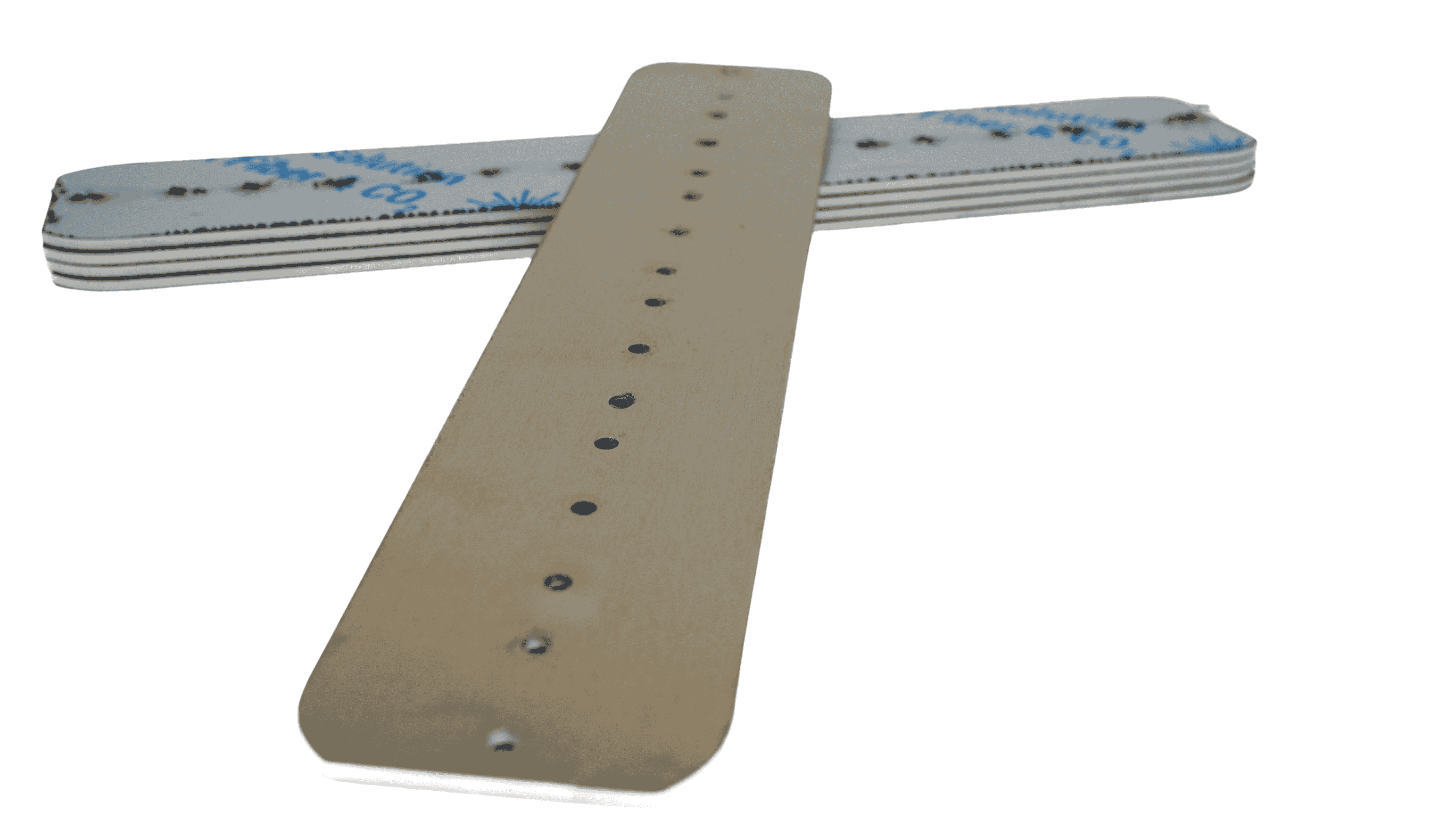
SBR Rubber Reinforced CUTTING

Material HB Description
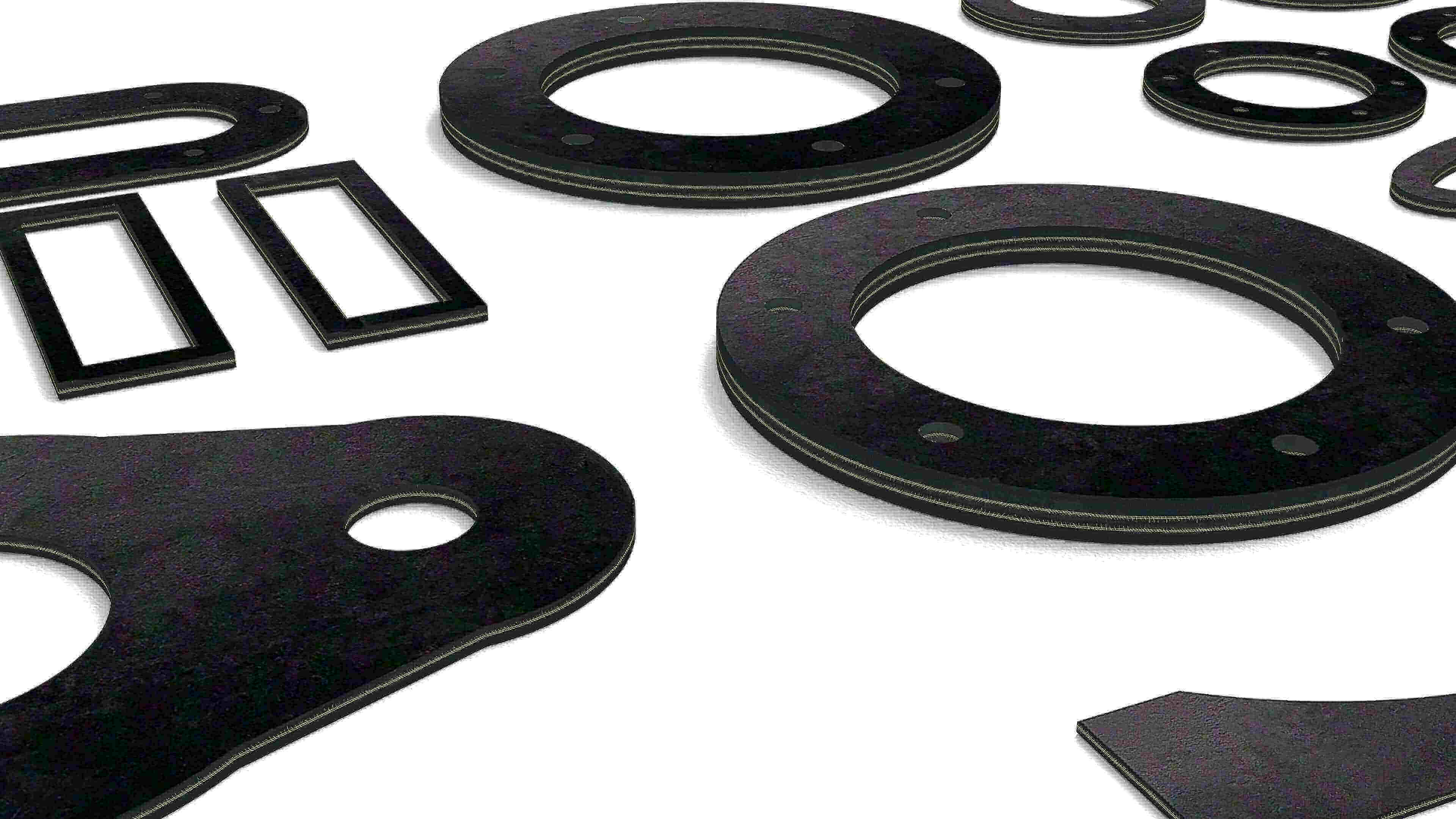
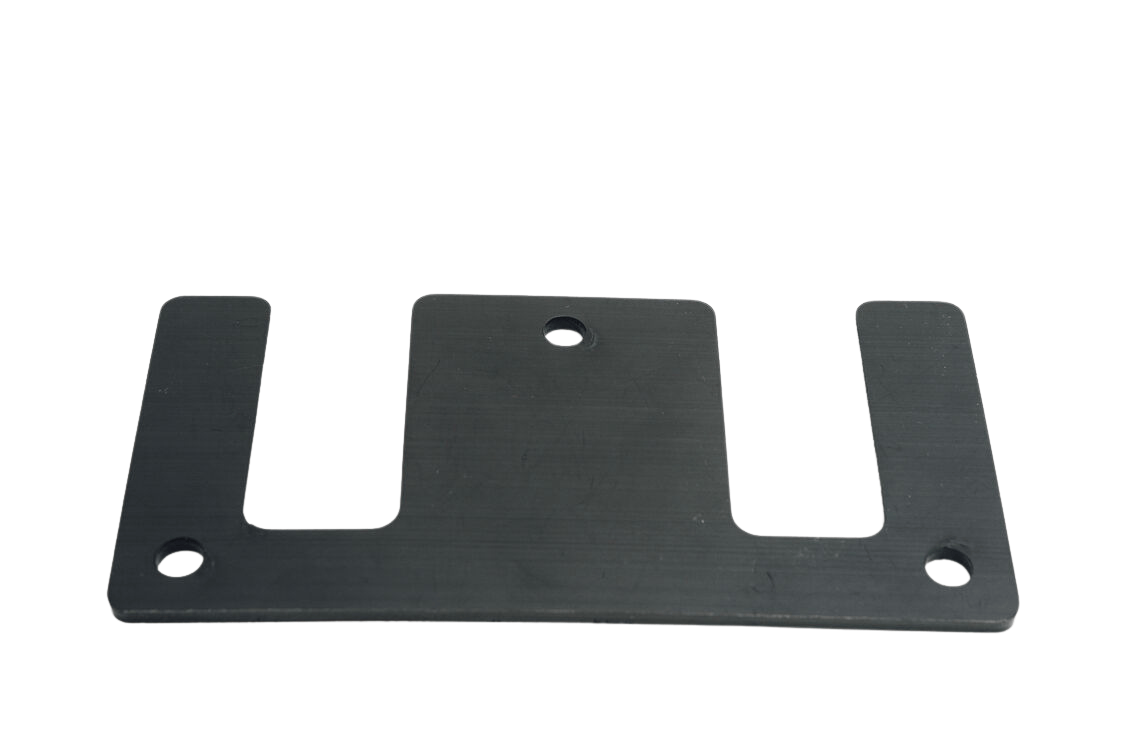
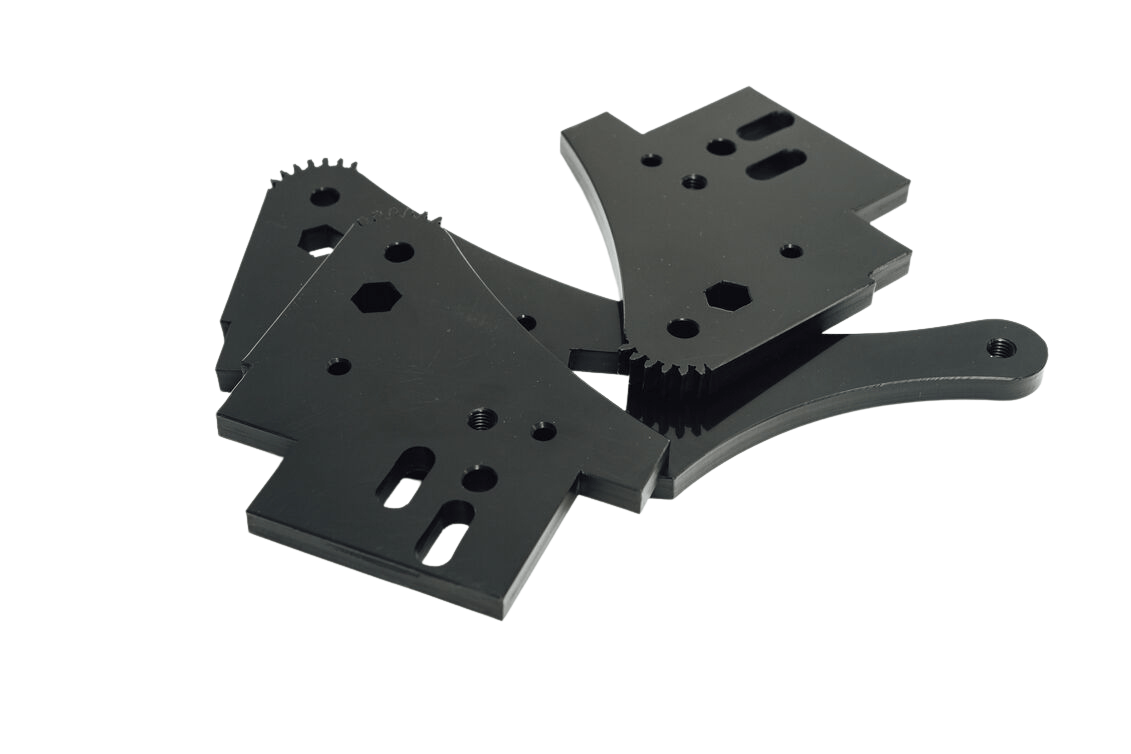
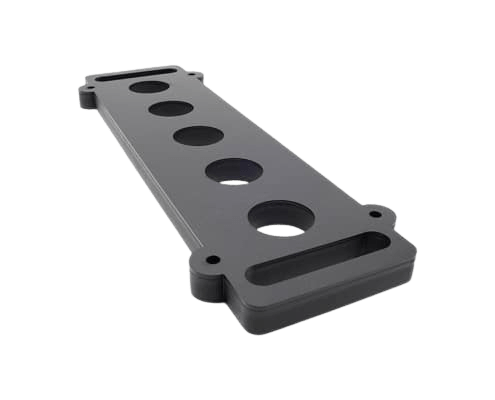
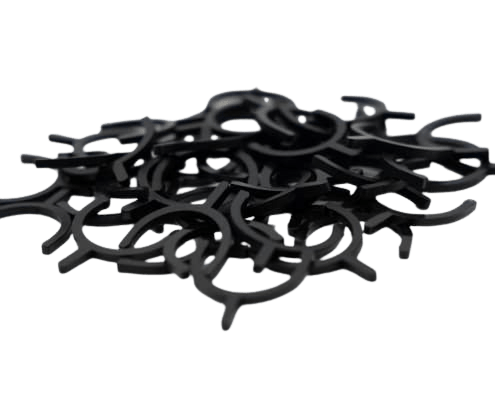
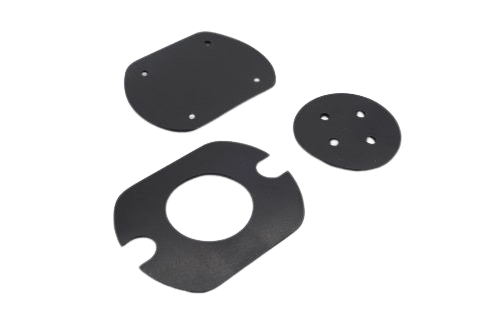
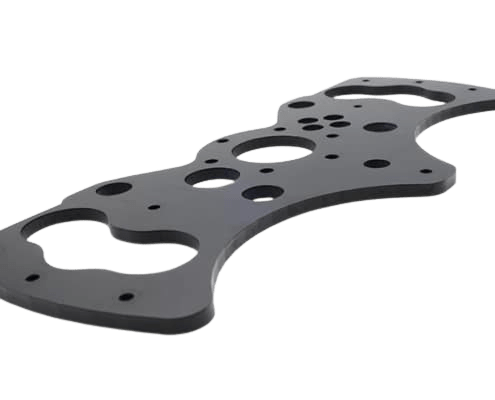
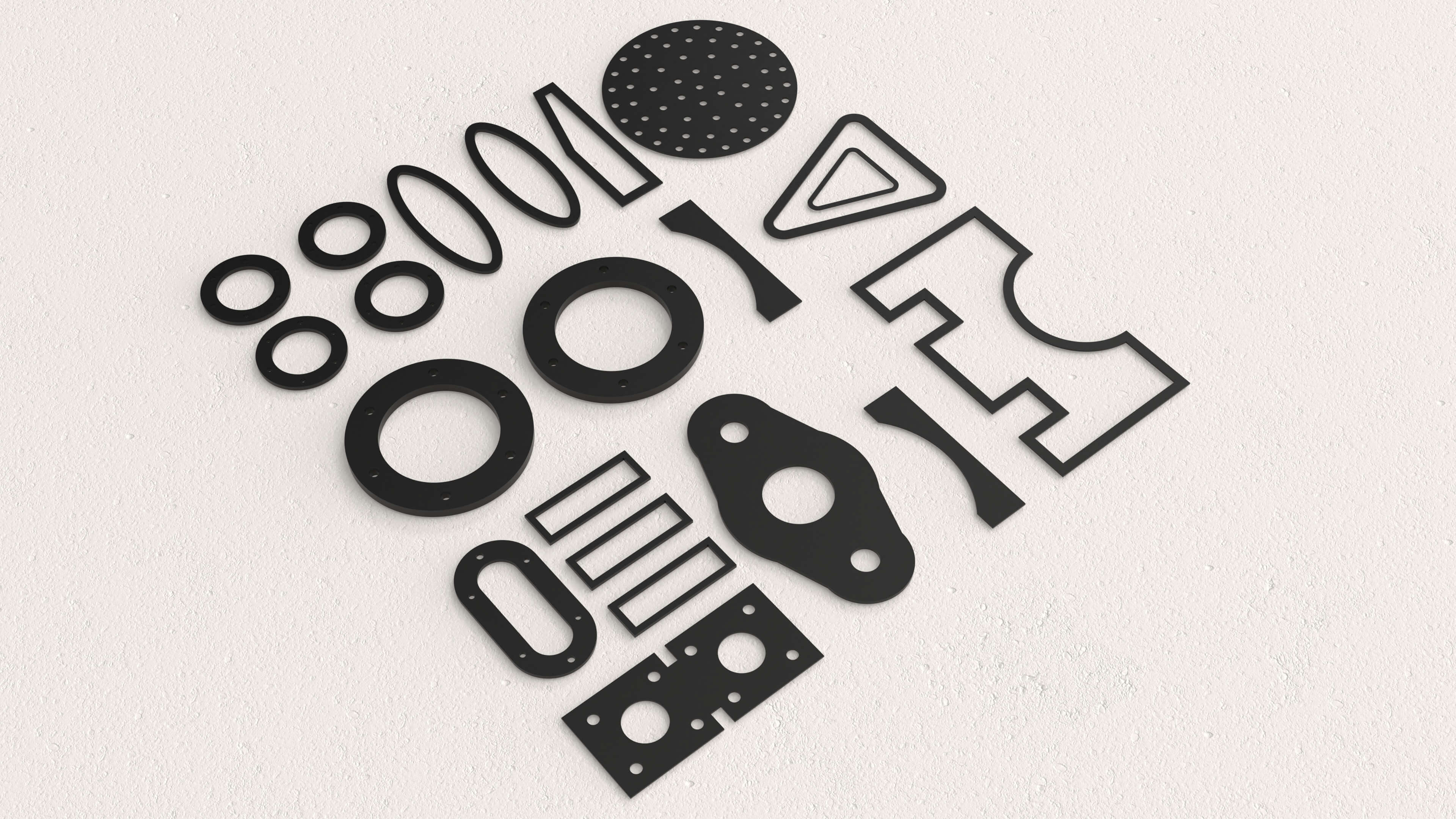
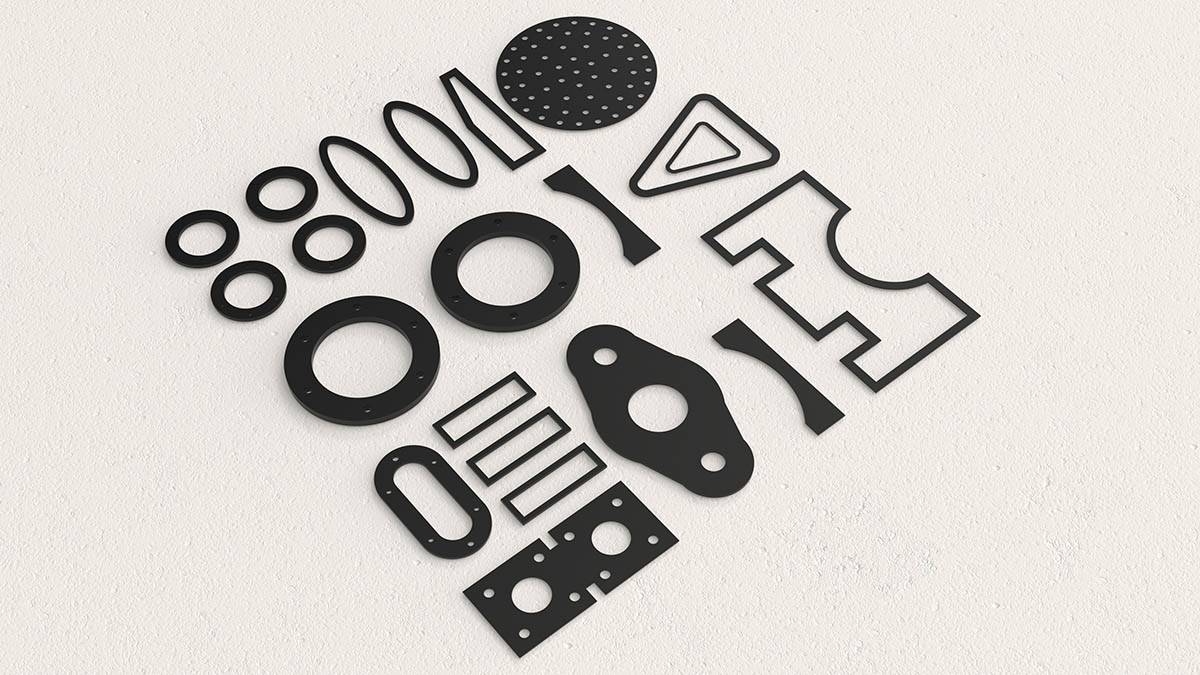
Discover the cutting of SBR Rubber with 1 Reinforcement Layer (Styrene-Butadiene Rubber) at CutWise.
CALCULATE PRICE DIRECTLY
Overview Text

SBR Rubber with 1 Reinforcement Layer (Styrene-Butadiene Rubber)

Rubber

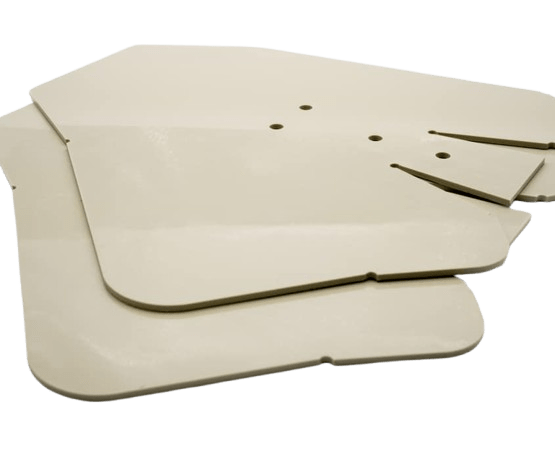
SBR rubber with 1 reinforcement layer is a versatile industrial-grade material known for its enhanced mechanical strength and tear resistance. The built-in textile layer improves tensile properties without compromising flexibility, making it ideal for demanding applications in heavy-duty environments.
Well-known trade names for SBR rubber include Krynac®, Butaflex®, and Europrene®. The reinforced variant is especially popular in mechanical engineering, manufacturing, and transport-related sectors.

  • Laser cutting
  • Milling
Calculate price directly

SBR rubber met 1 inlage (Styreen-Butadieenrubber) snijden

Key Properties of Reinforced SBR Rubber

  • High mechanical strength due to internal fabric reinforcement
  • Excellent abrasion and wear resistance
  • Resistant to mild acids and bases
  • Flexible at low to moderately high temperatures
  • Dampens vibrations and noise
  • Easy to process: cutting, milling, punching
  • Cost-effective alternative to natural rubber
  • Not suitable for prolonged oil or UV exposure
  • Improved dimensional stability over non-reinforced rubber

These qualities make SBR with reinforcement a go-to choice for industrial environments requiring durability and structural performance.

Datasheet Title
Technical properties of Reinforced SBR Rubber

Product information and operations
Thickness Dimensions Color Laser cutting Cutting Milling Bending Glueable Adhesive *
* 1 side self-adhesive (bottom side)
Technical properties

General Properties

Color Black

Density 1,5 g/cm³

Hardness 65 Shore A

Reinforcement 1x textile (polyester)

Mechanical Properties

Tensile Strength 8 MPa

Elongation at Break 250%

Tear Resistance 15 N/mm

Electrical Properties

Dielectric Strength Not insulating

Surface Resistance >10⁹ Ω

Thermal Properties

Thermal Conductivity 0,25 W/m·K

Heat Capacity 1,5 kJ/kg·K

Temperature Range

Min. Temperature -30 °C

Max. Temperature +90 °C

Applications of Reinforced SBR Rubber

Vibration dampers and machine mounts

Conveyor belt lining

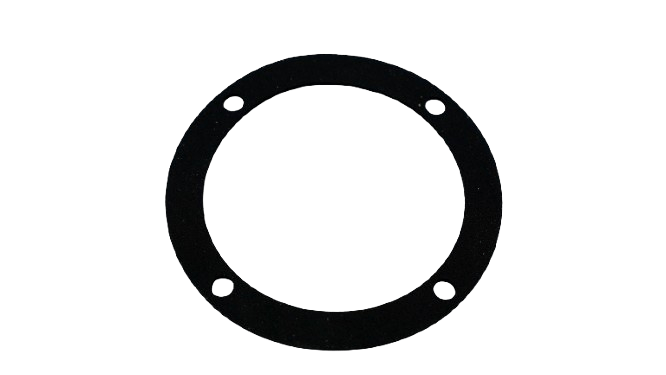
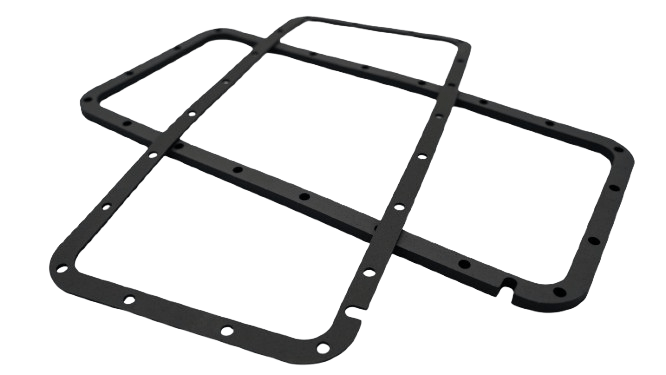
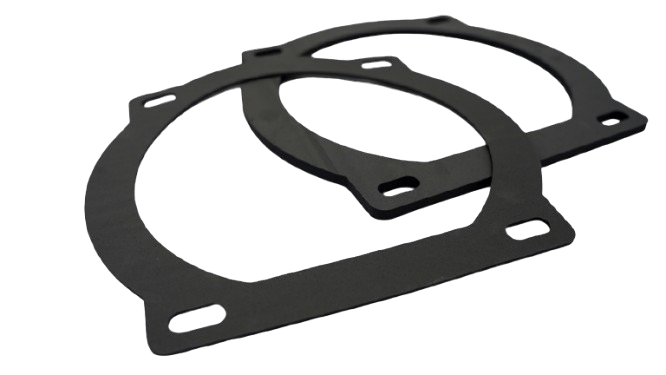
Industrial sealing gaskets

Protective mats and walkable surfaces

Flexible joints in piping systems

Splash and impact protection in vehicles

Workbench and storage rack lining

Technical seals in marine environments

Frequently Asked Questions about Reinforced SBR Rubber

What is the benefit of the reinforcement layer in SBR rubber?

The internal textile reinforcement greatly increases tensile strength and tear resistance, making the material more suitable for high-stress or dynamic applications.

Is SBR rubber with reinforcement suitable for outdoor use?

Not for long-term exposure. SBR has limited weather and UV resistance. For outdoor applications, EPDM or neoprene is a better alternative.

Is this material resistant to oils and fuels?

No, SBR is not resistant to oils, greases, or fuels. For oil-related applications, NBR (nitrile rubber) is a more appropriate choice.

Can this material be laser cut despite the reinforcement?

Yes, but with limitations. The textile layer may burn or fray. Milling or punching is often a better option for precise edges.
What is the operating temperature range of reinforced SBR rubber?

This material remains flexible between -30 °C and +90 °C. Beyond that, mechanical performance deteriorates rapidly.

How does reinforced SBR differ from non-reinforced SBR?

Reinforced SBR is stronger and more dimensionally stable, but less elastic. Non-reinforced SBR is softer and more flexible but weaker under tension.

Can this material be used as a vibration damper?

Yes, it’s highly suitable for vibration and shock absorption due to its elastic and reinforced structure.

What are suitable alternatives for reinforced SBR rubber?

Depending on the use case:
EPDM for UV and weather resistance
NBR for oil and fuel exposure
Natural rubber (NR) for high elasticity

HOW IT WORKS

Step
Upload

Upload your files

Upload your DXF, STEP, AI, or EPS file and start your order immediately.

Step
Sheet

Choose your material

Select from plastic, rubber, steel, stainless steel, or aluminum for your part.

Step
Document

Receive a quote within 10 seconds

After the quote, choose the desired delivery time that fits your schedule.

Step
Laser

Production

Ordered? We start production at the right moment for your delivery.

Step
Shipping

Delivery

Follow each step in real time, from production to delivery, for complete transparency.

Discover how CutWise works

Join thousands of companies using CutWise

Shell Honeywell Rolls Royce Volvo Siemens Tesla Philips
24/7 online laser cutting and milling
Quote in under 10 seconds
Order starting from 1 piece
ISO 9001:2015 certified
2000 m² machine park
150,000 parts per week
 

WHAT WILL YOU HAVE MADE TODAY?

CALCULATE PRICE NOW 

Material HB Title
EPDM CUTTING

Material HB Description
Discover the cutting of EPDM (Ethylene-Propylene-Diene Monomer) at CutWise.
CALCULATE PRICE DIRECTLY
Overview Text

EPDM (Ethylene-Propylene-Diene Monomer)

Rubber

EPDM is a synthetic rubber known for its excellent weather resistance, flexibility, and durability. The material retains its elastic properties over a wide temperature range and is resistant to ozone, UV radiation, and aging. This makes EPDM highly suitable for applications in construction, automotive, and industrial sectors where long-term exposure to weather is a factor.
Well-known trade names for EPDM include Keltan®, Vistalon®, and Nordel®. These grades are widely used in roofing, seals, and hoses.

  • Laser cutting
  • Milling
Calculate price directly

EPDM (Ethylene-Propylene-Diene Monomer) cutting

Properties of EPDM

  • Excellent resistance to ozone, UV radiation, and weather
  • Flexible and elastic, even at low temperatures down to -40 °C
  • Good chemical resistance to acids, alkalis, and ketones
  • Low water absorption, suitable for humid environments
  • Electrically insulating properties
  • Resistant to steam and hot water
  • Long lifespan with minimal maintenance
  • Suitable for drinking water applications (depending on composition)
  • Recyclable and eco-friendly alternative to other rubbers

Thanks to these properties, EPDM is a reliable choice for applications where durability and weather resistance are essential.

Datasheet Title
Technical properties of EPDM

Product information and operations
Thickness Dimensions Color Laser cutting Cutting Milling Bending Glueable Adhesive *
* 1 side self-adhesive (bottom side)
Technical properties

General

Density 1,10–1,50 g/cm³

Color Black / white / on request

Water Absorption < 0,5 %

Specific Heat Capacity 1,3 kj/Kg°C

Temperature Range

Minimum Service Temperature -40 °C

Maximum Service Temperature +120 °C

Mechanical

Tensile Strength 7–17 MPa

Elongation at Break 250–600 %

Hardness (Shore A) 30–90

Compression Set (22h/70 °C) 35–49 %

Electrical Properties

Dielectric Strength 20–30 kV/mm

Volume Resistivity 10¹³–10¹⁵ Ω·cm

Dielectric Constant (1 MHz) 4–6

Thermal Properties

Glass Transition Temperature -54 °C

Maximum Service Temperature +120 °C

Coefficient of Linear Thermal Expansion 160·10⁻⁶/K

Thermal Conductivity 0,25 W/m·K

Applications of EPDM

Roof coverings and waterproof membranes in construction

Seals and gaskets in windows and doors

Hoses and pipes for hot water and steam

Automotive seals, such as door and window rubbers

Insulation material in electrical applications

Geomembranes for ponds and water reservoirs

Vibration dampers and shock absorbers in machinery

Seals in HVAC systems and ventilation ducts

Frequently Asked Questions about EPDM

What makes EPDM suitable for outdoor applications?

EPDM resists ozone, UV radiation, and extreme weather, so it retains its properties during long-term outdoor exposure.

Is EPDM suitable for drinking water contact?

Yes—certain EPDM grades are certified for potable water use, depending on formulation and certification.

How does EPDM perform at low temperatures?

EPDM remains flexible and elastic down to –40 °C, making it ideal for cold environments.

Is EPDM resistant to chemicals?

EPDM has good resistance to many acids, alkalis, and ketones, but is less suitable for applications with oils and hydrocarbons.

Can EPDM be laser cut or milled?

Yes—EPDM can be both laser-cut and milled, depending on the required precision and application.

How does EPDM compare to other rubbers like NBR or SBR?

EPDM offers superior weather resistance and flexibility, while NBR is better for oil resistance and SBR is chosen for general-purpose uses.

Is EPDM recyclable?

Yes—EPDM is recyclable and increasingly reused in various applications, contributing to sustainability.

Can EPDM be bonded?

Yes—EPDM can be bonded with suitable adhesives, although mechanical fastening may be preferred in some cases.

HOW IT WORKS

Step
Upload

Upload your files

Upload your DXF, STEP, AI, or EPS file and start your order immediately.

Step
Sheet

Choose your material

Select from plastic, rubber, steel, stainless steel, or aluminum for your part.

Step
Document

Receive a quote within 10 seconds

After the quote, choose the desired delivery time that fits your schedule.

Step
Laser

Production

Ordered? We start production at the right moment for your delivery.

Step
Shipping

Delivery

Follow each step in real time, from production to delivery, for complete transparency.

Discover how CutWise works

Join thousands of companies using CutWise

Shell Honeywell Rolls Royce Volvo Siemens Tesla Philips
24/7 online laser cutting and milling
Quote in under 10 seconds
Order starting from 1 piece
ISO 9001:2015 certified
2000 m² machine park
150,000 parts per week
 

WHAT WILL YOU HAVE MADE TODAY?

CALCULATE PRICE NOW 

Material HB Title
PE FOAM CUTTING

Material HB Description
Discover the cutting of PE Foam at CutWise.
CALCULATE PRICE DIRECTLY
Overview Text

PE Foam (Polyethylene Foam)

Other

PE Foam, or polyethylene foam, is a lightweight closed-cell foam material known for its excellent shock absorption, flexibility, and chemical resistance. It is widely used in packaging, insulation, and technical applications where cushioning and protection are essential.
Well-known trade names include Ethafoam®, Stratocell®, and Plastazote®.

  • Laser cutting
  • Milling

Calculate price directly

PE Foam (Polyethylene Foam) cutting

Properties of PE Foam

  • Lightweight and flexible
  • Excellent shock absorption and vibration damping
  • Closed-cell structure: water-repellent and moisture-resistant
  • Good chemical resistance to solvents and oils
  • Thermal insulation properties
  • Non-abrasive and dust-free
  • Easy to process: cutting, milling, laminating
  • Available in various densities and colors

Thanks to these properties, PE Foam is a versatile material for various industrial applications.

Datasheet Title
Technical properties of PE Foam

Product information and operations
Thickness Dimensions Color Laser cutting Cutting Milling Bending Glueable Adhesive *
* 1 side self-adhesive (bottom side)
Technical properties

General

Density 18–45 kg/m³ (depending on type)

Color White, black, blue, grey, etc.

Surface Finish Fine-textured

Temperature Range

Minimum Service Temperature -40 °C

Maximum Service Temperature +90 °C

Mechanical

Tensile Strength 300–560 kPa

Elongation at Break 125–175%

Compression Set (25%, 30 min) 7,5–13%

Thermal Properties

Thermal Conductivity ca. 0,04 W/m·K

Coefficient of Linear Thermal Expansion ca. 0,05 mm/m·K

Applications of PE Foam

Packaging material for sensitive equipment

Insulation in HVAC systems

Vibration dampers in machinery and vehicles

Sports and fitness mats

Floor and wall insulation in construction

Buoyant elements in marine applications

Protective inlays for cases and packaging

Acoustic panels and sound insulation

Frequently Asked Questions about PE Foam

What is the difference between PE foam and other foams?

PE foam is a closed-cell foam with excellent shock-absorbing properties and chemical resistance, whereas other foams like PU foam are often open-cell and less moisture-resistant.

Is PE foam suitable for outdoor use?

Yes, PE foam resists moisture and many chemicals, but prolonged UV exposure can degrade it. For outdoor use, a UV-resistant variant is recommended.

Can PE foam be recycled?

Yes, PE foam is recyclable and often reused in various applications, depending on local recycling facilities.

Is PE foam flame-retardant?

Standard PE foam is not flame-retardant, but special flame-retardant grades are available where fire safety is required.

In what thicknesses and formats is PE foam available?

PE foam comes in various thicknesses—from a few millimeters to several centimeters—and in sheet and roll formats.

How is PE foam processed?

PE foam can be easily cut, milled, laminated, and bonded with suitable adhesives, enabling custom solutions.

Is PE foam suitable for thermal insulation?

Yes, its closed-cell structure offers good thermal insulation, making it ideal for HVAC and building applications.

Can PE foam be used for acoustic insulation?

PE foam has limited sound-absorbing properties. For better acoustic performance, materials like PU foam or acoustic felt are often used.

HOW IT WORKS

Step
Upload

Upload your files

Upload your DXF, STEP, AI, or EPS file and start your order immediately.

Step
Sheet

Choose your material

Select from plastic, rubber, steel, stainless steel, or aluminum for your part.

Step
Document

Receive a quote within 10 seconds

After the quote, choose the desired delivery time that fits your schedule.

Step
Laser

Production

Ordered? We start production at the right moment for your delivery.

Step
Shipping

Delivery

Follow each step in real time, from production to delivery, for complete transparency.

Discover how CutWise works

Join thousands of companies using CutWise

Shell Honeywell Rolls Royce Volvo Siemens Tesla Philips
24/7 online laser cutting and milling
Quote in under 10 seconds
Order starting from 1 piece
ISO 9001:2015 certified
2000 m² machine park
150,000 parts per week
 

WHAT WILL YOU HAVE MADE TODAY?

CALCULATE PRICE NOW 

Material HB Title
EPDM FOAM CUTTING

Material HB Description
Discover the cutting of EPDM Foam at CutWise.
CALCULATE PRICE DIRECTLY
Overview Text

EPDM Foam (Ethylene Propylene Diene Monomer Sponge Rubber)

Other

EPDM Foam is a synthetic closed-cell sponge rubber made from ethylene propylene diene monomer. This material is known for its excellent weather resistance, UV stability, and durability, making it ideal for demanding environments. Thanks to its elastic properties and ability to retain shape after compression, EPDM Foam is widely used for sealing and insulation applications.
Well-known trade names include Keltan®, Nordel®, and Vistalon®.

  • Laser cutting
  • Milling

Calculate price directly

EPDM Foam (Ethylene Propylene Diene Monomer Sponge Rubber) cutting

Properties of EPDM Foam

  • Excellent resistance to UV radiation, ozone, and weather
  • Wide temperature range: from -40 °C to +120 °C
  • Good thermal and acoustic insulation properties
  • Lightweight and flexible, retains shape after compression
  • Resistant to water, steam, and various chemicals
  • Non-dusting and fiber-free
  • Easy to process and bond
  • Durable and low-maintenance

These properties make EPDM Foam a versatile material for sealing, insulation, and damping applications across multiple industries.

Datasheet Title
Technical properties of EPDM Foam

Product information and operations
Thickness Dimensions Color Laser cutting Cutting Milling Bending Glueable Adhesive *
* 1 side self-adhesive (bottom side)
Technical properties

General

Density 180–200 kg/m³

Color Black

Surface Finish Fine-textured

Temperature Range

Minimum Service Temperature -40 °C

Maximum Service Temperature +120 °C

Mechanical Properties

Hardness (Shore OO) 50–60

Tensile Strength 780–850 kPa

Elongation at Break 140–180%

Compression Set (25%, 22h @ 23 °C) 4–5%

Thermal Properties

Thermal Conductivity ca. 0,04 W/m·K

Coefficient of Linear Thermal Expansion ca. 0,05 mm/m·K

Applications of EPDM Foam

Seals for windows, doors, and shutters

Insulation in HVAC systems (heating, ventilation, air conditioning)

Automotive: gaskets, seals, and vibration dampers

Construction: expansion joints and façade seals

Electrical enclosures and outdoor cabinets

Acoustic panels and soundproofing

Packaging material for sensitive equipment

Shock-absorbing sports and playground flooring

Frequently Asked Questions about EPDM Foam

What’s the difference between EPDM Foam and solid EPDM rubber?

EPDM Foam has a closed-cell structure, making it lighter and more flexible than solid EPDM—ideal where compression and thermal/acoustic insulation are critical.

Is EPDM Foam suitable for outdoor use?

Yes, its excellent resistance to UV, ozone, and weathering makes it perfect for long-term exterior applications.


Can EPDM Foam be bonded?

Yes, EPDM Foam bonds easily with the right adhesives, depending on the substrate and application.


Is EPDM Foam flame-retardant?

Standard EPDM Foam is not inherently flame-retardant. Fire-rated versions are available where required.

How does EPDM Foam perform at low temperatures?

EPDM Foam remains flexible and maintains its sealing properties down to –40 °C, suited for cold environments.

Is EPDM Foam chemical-resistant?

It resists many chemicals (acids, bases), but is less suitable for oil or hydrocarbon exposure.

What thicknesses is EPDM Foam available in?

Available from a few millimeters up to several centimeters, depending on supplier.

Is EPDM Foam recyclable?

Technically yes, but recycling is more complex than for some other materials. Check local guidelines.


HOW IT WORKS

Step
Upload

Upload your files

Upload your DXF, STEP, AI, or EPS file and start your order immediately.

Step
Sheet

Choose your material

Select from plastic, rubber, steel, stainless steel, or aluminum for your part.

Step
Document

Receive a quote within 10 seconds

After the quote, choose the desired delivery time that fits your schedule.

Step
Laser

Production

Ordered? We start production at the right moment for your delivery.

Step
Shipping

Delivery

Follow each step in real time, from production to delivery, for complete transparency.

Discover how CutWise works

Join thousands of companies using CutWise

Shell Honeywell Rolls Royce Volvo Siemens Tesla Philips
24/7 online laser cutting and milling
Quote in under 10 seconds
Order starting from 1 piece
ISO 9001:2015 certified
2000 m² machine park
150,000 parts per week
 

WHAT WILL YOU HAVE MADE TODAY?

CALCULATE PRICE NOW 

Material HB Title
FKM CUTTING

Material HB Description
Discover the cutting of FKM (Viton®) at CutWise.
CALCULATE PRICE DIRECTLY
Overview Text

FKM (Viton®)

Rubber

FKM, also known by the brand name Viton®, is a fluoroelastomer that excels in chemical resistance and temperature stability. The material maintains its elastic properties across a wide temperature range and resists aggressive chemicals, oils, and fuels. This makes FKM a popular choice for demanding industrial applications, including aerospace, automotive, and chemical processing.
Well-known trade names for FKM include Viton®, Dai-El®, Dyneon®, Tecnoflon®, and Fluonox®. These grades are used worldwide in applications where high performance and reliability are required.

  • Laser cutting
  • Milling

Calculate price directly

FKM (Viton®) cutting

Properties of FKM

  • Exceptional chemical resistance to oils, fuels, acids, and solvents
  • Excellent temperature resistance from -26 °C to +230 °C (short-term up to +250 °C)
  • Low gas permeability, suitable for vacuum applications
  • Good mechanical properties such as tensile strength and wear resistance
  • Resistant to ozone, UV radiation, and aging
  • Electrically insulating properties
  • Available in various hardnesses (Shore A 55–90) and colors
  • Low compression set, maintains shape under long-term load
  • Suitable for use in aggressive chemical environments

Thanks to these properties, FKM is a reliable choice for applications requiring durability, chemical resistance, and temperature stability.

Datasheet Title
Technical properties of FKM

Product information and operations
Thickness Dimensions Color Laser cutting Cutting Milling Bending Glueable Adhesive *
* 1 side self-adhesive (bottom side)
Technical properties

General

Density 1,80–2,00 g/cm³

Color Black / brown / on request

Water Absorption < 0,5 %

Temperature Range

Minimum Service Temperature -26 °C

Maximum Service Temperature +230 °C

Mechanical

Tensile Strength 7–20 MPa

Elongation at Break 150–300 %

Hardness (Shore A) 55–90

Compression Set (22h/70 °C) 10–30 %

Electrical Properties

Dielectric Strength 20–30 kV/mm

Volume Resistivity 10¹³–10¹⁵ Ω·cm

Dielectric Constant (1 MHz) 6–8

Thermal Properties

Glass Transition Temperature -26 °C

Maximum Service Temperature +230 °C

Coefficient of Linear Thermal Expansion 160–200·10⁻⁶/K

Thermal Conductivity 0,2–0,3 W/m·K

Applications of FKM

Seals and gaskets in the aerospace industry

Fuel systems and engine components in automotive

Pumps, valves, and piping in the chemical industry

O-rings and seals in oil & gas installations

Electrical insulators and cable jacketing in power generation

Equipment in pharmaceutical and food industries

Vacuum applications and clean-room environments

Hoses and seals in semiconductor manufacturing

Frequently Asked Questions about FKM

What makes FKM suitable for aggressive-chemical service?

FKM has outstanding resistance to a wide range of chemicals—oils, fuels, acids, and solvents—making it ideal for chemical-industry applications.

Is FKM resistant to high temperatures?

Yes. FKM retains its elastomeric properties up to +230 °C and can withstand short peaks to +250 °C.

How does FKM perform at low temperatures?

FKM remains flexible down to about –26 °C, depending on the formulation.

Is FKM suitable for outdoor use?

Yes. FKM resists ozone, UV, and weathering exceptionally well, making it ideal for prolonged outdoor service.

Can FKM be laser-cut or milled?

Yes. FKM can be both laser-cut and CNC-milled, depending on required precision.

Is FKM electrically insulating?

Yes. With its high dielectric strength, FKM is an excellent electrical insulator.

How does FKM compare to other rubbers like EPDM or NBR?

FKM offers superior chemical and temperature resistance, whereas EPDM excels at ozone resistance and NBR at oil and fuel resistance.

Is FKM recyclable?

Technically yes, but recycling facilities for FKM are limited and region-dependent.

HOW IT WORKS

Step
Upload

Upload your files

Upload your DXF, STEP, AI, or EPS file and start your order immediately.

Step
Sheet

Choose your material

Select from plastic, rubber, steel, stainless steel, or aluminum for your part.

Step
Document

Receive a quote within 10 seconds

After the quote, choose the desired delivery time that fits your schedule.

Step
Laser

Production

Ordered? We start production at the right moment for your delivery.

Step
Shipping

Delivery

Follow each step in real time, from production to delivery, for complete transparency.

Discover how CutWise works

Join thousands of companies using CutWise

Shell Honeywell Rolls Royce Volvo Siemens Tesla Philips
24/7 online laser cutting and milling
Quote in under 10 seconds
Order starting from 1 piece
ISO 9001:2015 certified
2000 m² machine park
150,000 parts per week
 

WHAT WILL YOU HAVE MADE TODAY?

CALCULATE PRICE NOW 

Material HB Title
NEOPRENE CUTTING

Material HB Description
Discover the cutting of Neoprene (CR Rubber) at CutWise.
CALCULATE PRICE DIRECTLY
Overview Text

Neoprene (CR Rubber)

Rubber

Neoprene, also known as CR rubber (Chloroprene Rubber), is a versatile synthetic rubber known for its excellent balance of mechanical strength, chemical resistance, and weather resistance. Thanks to these properties, Neoprene is a popular choice for a variety of industrial applications, ranging from seals to vibration dampers.
Well-known trade names for Neoprene include Duprene®, Baypren®, and Skyprene®. These grades are used worldwide in applications where durability and reliability are essential.

  • Laser cutting
  • Milling

Calculate price directly

Neoprene (CR Rubber) cutting

Properties of Neoprene

  • Good resistance to oils, greases, and fuels
  • Excellent resistance to ozone, UV radiation, and weather
  • Good mechanical properties such as tensile strength and wear resistance
  • Temperature resistant from -30 °C to +100 °C
  • Easy to process: simple to glue, weld, and shape
  • Low gas permeability, suitable for seals
  • Electrically insulating properties
  • Available in various hardnesses (Shore A 40–70) and colors
  • Economical alternative for oil exposure applications

Thanks to these properties, Neoprene is a reliable choice for applications where oil resistance, weather resistance, and mechanical performance are required.

Datasheet Title
Technical properties of Neoprene

Product information and operations
Thickness Dimensions Color Laser cutting Cutting Milling Bending Glueable Adhesive *
* 1 side self-adhesive (bottom side)
Technical properties

General

Density 1,23 g/cm³

Color Black / on request

Water Absorption < 5 %

Specific Heat Capacity 1,3 kj/Kg°C

Temperature Range

Minimum Service Temperature -30 °C

Maximum Service Temperature +100 °C

Mechanical

Tensile Strength 7–17 MPa

Elongation at Break 200–600 %

Hardness (Shore A) 40–70

Compression Set (22h/70 °C) 20–35 %

Electrical Properties

Dielectric Strength 20–30 kV/mm

Volume Resistivity 10¹³–10¹⁵ Ω·cm

Dielectric Constant (1 MHz) 4–6

Thermal Properties

Glass Transition Temperature -43 °C

Maximum Service Temperature +100 °C

Coefficient of Linear Thermal Expansion 150·10⁻⁶/K

Thermal Conductivity 0,2–0,3 W/m·K

Applications of Neoprene

Seals and gaskets in the automotive industry

Hoses for water, air, and non-oil liquids

Vibration dampers and shock absorbers in machinery

Electrical insulators and cable jacketing

Flooring and mats in industrial and commercial settings

Protective apparel and accessories, such as wetsuits and gloves

Adhesives and sealants for various uses

Seals in HVAC systems and ventilation ductwork

Frequently Asked Questions about Neoprene

What makes neoprene suitable for outdoor applications?

Neoprene resists ozone, UV, and weather extremely well, retaining its properties under prolonged outdoor exposure.

Is neoprene resistant to oils and greases?

Yes, neoprene has good resistance to many oils, greases, and fuels, making it ideal for oil-rich environments.


How does neoprene perform at low temperatures?

Neoprene remains flexible and elastic down to –30 °C, suitable for cold-environment applications.

Can neoprene be laser-cut or milled?

Yes, neoprene can be both laser-cut and CNC-milled, depending on the precision required.


Is neoprene electrically insulating?

Yes, neoprene offers excellent dielectric strength and is widely used in electronics.


How does neoprene compare to other rubbers like EPDM or NBR?

Neoprene balances oil resistance and weather resistance; EPDM is superior in ozone resistance and NBR in fuel resistance.

Is neoprene recyclable?

Technically yes, but recycling facilities are limited and vary by region.

Can neoprene be bonded?

Yes, neoprene bonds well with suitable adhesives, though mechanical fastening may be preferred in some cases.


HOW IT WORKS

Step
Upload

Upload your files

Upload your DXF, STEP, AI, or EPS file and start your order immediately.

Step
Sheet

Choose your material

Select from plastic, rubber, steel, stainless steel, or aluminum for your part.

Step
Document

Receive a quote within 10 seconds

After the quote, choose the desired delivery time that fits your schedule.

Step
Laser

Production

Ordered? We start production at the right moment for your delivery.

Step
Shipping

Delivery

Follow each step in real time, from production to delivery, for complete transparency.

Discover how CutWise works

Join thousands of companies using CutWise

Shell Honeywell Rolls Royce Volvo Siemens Tesla Philips
24/7 online laser cutting and milling
Quote in under 10 seconds
Order starting from 1 piece
ISO 9001:2015 certified
2000 m² machine park
150,000 parts per week
 

WHAT WILL YOU HAVE MADE TODAY?

CALCULATE PRICE NOW 

Material HB Title
SILICONE CUTTING

Material HB Description
Discover the cutting of Silicone Rubber (VMQ) at CutWise.
CALCULATE PRICE DIRECTLY
Overview Text

Silicone Rubber (VMQ)

Rubber

Silicone rubber, also known as VMQ (Vinyl-Methyl-Silicone), is a high-performance elastomer that excels in temperature resistance, flexibility, and chemical inertness. The material retains its elastic properties over a wide temperature range and is resistant to ozone, UV radiation, and aging. This makes silicone rubber ideal for applications in the medical sector, food industry, electronics, and aerospace.
Well-known trade names for silicone rubber include Silastic®, Elastosil®, Nusil®, and Silbione®. These grades are used worldwide in applications where high performance and reliability are essential.

  • Laser cutting
  • Milling

Calculate price directly

Silicone Rubber (VMQ) cutting

Properties of Silicone Rubber

  • Exceptional temperature resistance from -60 °C to +230 °C (short-term up to +250 °C)
  • Excellent flexibility and elasticity, even at low temperatures
  • High resistance to ozone, UV radiation, and weather
  • Chemically inert and biocompatible, suitable for medical and food applications
  • Low compression set, maintains shape under long-term load
  • Electrically insulating properties, suitable for electronic applications
  • Available in various colors with a hardness of 60 Shore A
  • Resistant to steam and hot water
  • Long lifespan with minimal maintenance

Thanks to these properties, silicone rubber is a reliable choice for applications where durability, flexibility, and resistance to extreme conditions are essential.

Datasheet Title
Technical properties of SILICONE

Product information and operations
Thickness Dimensions Color Laser cutting Cutting Milling Bending Glueable Adhesive *
* 1 side self-adhesive (bottom side)
Technical properties

General

Density 1,10–1,50 g/cm³

Color Transparent / red / white / on request

Water Absorption < 0,5 %

Temperature Range

Minimum Service Temperature -60 °C

Maximum Service Temperature +230 °C

Mechanical

Tensile Strength 6–11 MPa

Elongation at Break 200–700 %

Hardness (Shore A) 10–90

Compression Set (22h/70 °C) 10–35 %

Electrical Properties

Dielectric Strength 20–30 kV/mm

Volume Resistivity 10¹³–10¹⁵ Ω·cm

Dielectric Constant (1 MHz) 2,7–3,3

Thermal Properties

Glass Transition Temperature -60 °C

Maximum Service Temperature +230 °C

Coefficient of Linear Thermal Expansion 200–300·10⁻⁶/K

Thermal Conductivity 0,2–0,3 W/m·K

Applications of SILICONE

Seals and gaskets in the food industry

Medical implants and devices

Electrical insulators and cable jacketing

Kitchenware and bakeware

O-rings and seals in aerospace

Vibration dampers and shock absorbers in machinery

Molds for casting applications

Seals in HVAC systems and ventilation ductwork

Frequently Asked Questions about SILICONE

What makes silicone rubber suitable for medical applications?

Silicone rubber is biocompatible, chemically inert, and withstands sterilization processes, making it safe for implants and medical devices.

Is silicone rubber safe for food contact?

Yes, silicone rubber is chemically inert and meets FDA and EU food-contact standards, making it ideal for the food industry.


How does silicone rubber perform at low temperatures?

Silicone remains flexible and elastic down to –60 °C, perfect for cold-environment applications.

Is silicone rubber resistant to UV and ozone?

Yes, silicone has excellent UV, ozone, and weather resistance, making it suitable for outdoor use.

Can silicone rubber be laser cut or milled?

Yes, silicone can be both laser cut and CNC-milled, depending on required precision.


Is silicone rubber electrically insulating?

Yes, silicone offers superb dielectric strength and is widely used in electronics.


How does silicone compare to other rubbers like EPDM or NBR?

Silicone outperforms in temperature range and chemical inertness, while EPDM resists ozone better and NBR excels in oil resistance.

Is silicone rubber recyclable?

Technically yes, but recycling facilities are limited and depend on local availability.

HOW IT WORKS

Step
Upload

Upload your files

Upload your DXF, STEP, AI, or EPS file and start your order immediately.

Step
Sheet

Choose your material

Select from plastic, rubber, steel, stainless steel, or aluminum for your part.

Step
Document

Receive a quote within 10 seconds

After the quote, choose the desired delivery time that fits your schedule.

Step
Laser

Production

Ordered? We start production at the right moment for your delivery.

Step
Shipping

Delivery

Follow each step in real time, from production to delivery, for complete transparency.

Discover how CutWise works

Join thousands of companies using CutWise

Shell Honeywell Rolls Royce Volvo Siemens Tesla Philips
24/7 online laser cutting and milling
Quote in under 10 seconds
Order starting from 1 piece
ISO 9001:2015 certified
2000 m² machine park
150,000 parts per week
 

WHAT WILL YOU HAVE MADE TODAY?

CALCULATE PRICE NOW 

Material HB Title
SBR CUTTING

Material HB Description
Discover the cutting of SBR (Styrene-Butadiene Rubber) at CutWise.
CALCULATE PRICE DIRECTLY
Overview Text

SBR (Styrene-Butadiene Rubber)

Rubber

SBR, or styrene-butadiene rubber, is a synthetic rubber known for its excellent wear resistance and good mechanical properties. The material is a cost-effective alternative to natural rubber and is widely used in various industrial sectors, including automotive, mechanical engineering, and general industry. SBR offers a good balance between flexibility, tensile strength, and durability, making it suitable for a wide range of applications.
Well-known trade names for SBR include Buna-S, Europrene®, and Krynac®. These grades are widely used worldwide in products such as tires, seals, hoses, and flooring.

  • Laser cutting
  • Milling

Calculate price directly

SBR (Styrene-Butadiene Rubber) cutting

Properties of SBR

  • Excellent wear resistance and mechanical strength
  • Good flexibility and elasticity at low temperatures
  • Cost-effective alternative to natural rubber
  • Easy to process: good for gluing, welding, and forming
  • Moderate resistance to ozone, UV radiation, and weather
  • Limited chemical resistance; not suitable for oils and fuels
  • Available in various hardnesses (Shore A 30–90) and colors
  • Not suitable for long-term exposure to sunlight or ozone
  • Versatile for various industrial applications

Thanks to these properties, SBR is a reliable choice for applications requiring wear resistance and mechanical performance.

Datasheet Title
Technical properties of SBR

Product information and operations
Thickness Dimensions Color Laser cutting Cutting Milling Bending Glueable Adhesive *
* 1 side self-adhesive (bottom side)
Technical properties

General

Density 0,94–1,00 g/cm³

Color Black / red / on request

Water Absorption < 0,5 %

Temperature Range

Minimum Service Temperature -40 °C

Maximum Service Temperature +100 °C

Mechanical

Tensile Strength 10–25 MPa

Elongation at Break 250–600 %

Hardness (Shore A) 30–90

Compression Set (22h/70 °C) 20–35 %

Electrical Properties

Dielectric Strength 20–30 kV/mm

Volume Resistivity 10¹³–10¹⁵ Ω·cm

Dielectric Constant (1 MHz) 4–6

Thermal Properties

Glass Transition Temperature -50 °C

Maximum Service Temperature +100 °C

Coefficient of Linear Thermal Expansion 150·10⁻⁶/K

Thermal Conductivity 0,2–0,3 W/m·K

Applications of SBR

Tires for cars, trucks, and agricultural vehicles

Seals and gaskets in various industrial applications

Hoses for water, air, and non-oil fluids

Flooring and mats in industrial and commercial settings

Conveyor belts and rollers in production and processing lines

Shock absorbers and vibration isolators in machinery

Adhesives and sealants for general-purpose use

Jacketing for cables and electrical components

Frequently Asked Questions about SBR

What are the main advantages of SBR compared to natural rubber?

SBR offers better abrasion resistance, more consistent quality, and lower cost than natural rubber; it also ages more predictably indoors.

Is SBR suitable for applications with oils and fuels?

No, SBR is not resistant to oils, greases, or fuels. For those environments, NBR (nitrile rubber) is recommended.


Can SBR be used outdoors?

Standard SBR has limited ozone and UV resistance, so it requires additional protection for long-term outdoor use.

How does SBR perform at low temperatures?

SBR remains flexible and elastic down to about –40 °C, making it suitable for cold-environment applications.

Is SBR food-safe?

Standard SBR is not food-grade; however, special FDA- and EU-compliant grades are available for food-contact applications.

Can SBR be laser-cut or machined?

Yes, SBR can be both laser-cut and CNC-milled, depending on the precision requirements.


How does SBR compare to other rubbers like EPDM or NBR?

SBR excels in abrasion resistance and mechanical strength but offers lower resistance to ozone, UV, and oils than EPDM or NBR.

Is SBR recyclable?

Yes, SBR is recyclable, though recycling options may vary by region.


HOW IT WORKS

Step
Upload

Upload your files

Upload your DXF, STEP, AI, or EPS file and start your order immediately.

Step
Sheet

Choose your material

Select from plastic, rubber, steel, stainless steel, or aluminum for your part.

Step
Document

Receive a quote within 10 seconds

After the quote, choose the desired delivery time that fits your schedule.

Step
Laser

Production

Ordered? We start production at the right moment for your delivery.

Step
Shipping

Delivery

Follow each step in real time, from production to delivery, for complete transparency.

Discover how CutWise works

Join thousands of companies using CutWise

Shell Honeywell Rolls Royce Volvo Siemens Tesla Philips
24/7 online laser cutting and milling
Quote in under 10 seconds
Order starting from 1 piece
ISO 9001:2015 certified
2000 m² machine park
150,000 parts per week
 

WHAT WILL YOU HAVE MADE TODAY?

CALCULATE PRICE NOW 

Material HB Title
NBR CUTTING

Material HB Description
Discover the cutting of NBR (Nitrile Rubber) at CutWise.
CALCULATE PRICE DIRECTLY
Overview Text

NBR (Nitrile Rubber)

Rubber

NBR, or nitrile butadiene rubber, is a synthetic rubber known for its excellent resistance to oils, greases, and fuels. Thanks to these properties, NBR is widely used in the automotive industry, mechanical engineering, and the oil and gas sector. The material offers a good balance between flexibility, mechanical strength, and chemical resistance.
Well-known trade names for NBR include Buna-N, Perbunan®, Nipol®, and Europrene®. These grades are used worldwide in applications where oil resistance and durability are essential.

  • Laser cutting
  • Milling

Calculate price directly

NBR (Nitrile Rubber) cutting

Properties of NBR

  • Excellent resistance to oils, greases, and fuels
  • Good mechanical properties such as tensile strength and wear resistance
  • Low gas permeability, suitable for seals
  • Temperature resistant from -30 °C to +100 °C (short term up to +120 °C)
  • Good processability: easy to glue, weld, and form
  • Limited resistance to ozone, UV radiation, and weather
  • Not suitable for aromatic solvents or strong acids
  • Cost-effective alternative for oil exposure applications

Thanks to these properties, NBR is a reliable choice for applications requiring oil resistance and mechanical performance.

Datasheet Title
Technical properties of NBR

Product information and operations
Thickness Dimensions Color Laser cutting Cutting Milling Bending Glueable Adhesive *
* 1 side self-adhesive (bottom side)
Technical properties

General

Density 1,00–1,25 g/cm³

Color Black / on request

Water Absorption < 0,5 %

Temperature Range

Minimum Service Temperature -30 °C

Maximum Service Temperature +100 °C

Mechanical

Tensile Strength 10–25 MPa

Elongation at Break 200–600 %

Hardness (Shore A) 30–90

Compression Set (22h/70 °C) 20–35 %

Electrical Properties

Dielectric Strength 20–30 kV/mm

Volume Resistivity 10¹³–10¹⁵ Ω·cm

Dielectric Constant (1 MHz) 4–6

Thermal Properties

Glass Transition Temperature -30 °C

Maximum Service Temperature +100 °C

Coefficient of Linear Thermal Expansion 150·10⁻⁶/K

Thermal Conductivity 0,2–0,3 W/m·K

Applications of NBR

O-rings and seals in hydraulic and pneumatic systems

Hoses and gaskets in the automotive industry

Fuel- and oil-resistant gloves and protective clothing

Seals and diaphragms in the oil & gas industry

Conveyor belts and rollers in industrial applications

Adhesives and sealants for various uses

Jacketing of cables and electrical components

Flooring and mats in industrial environments

Frequently Asked Questions about NBR

What makes NBR suitable for oil and grease applications?

NBR has high resistance to mineral oils, greases, and fuels, making it ideal for seals and hoses in oil-rich environments.

Is NBR resistant to ozone and UV?

Standard NBR has limited resistance to ozone and UV; for outdoor use, a UV-stabilized grade is recommended.

Can NBR be used at low temperatures?

Yes NBR remains flexible down to about –30 °C, depending on the formulation.


Is NBR food-safe?

Standard NBR is not food-safe. Special FDA- and EU-compliant grades are available for food-contact applications.

How does NBR compare to other rubbers like EPDM or Viton®?

NBR excels in oil resistance but has lower UV and high-temperature resistance compared to EPDM or Viton®.

Can NBR be laser-cut or milled?

Yes NBR can be both laser-cut and milled, depending on required precision and application.

Is NBR recyclable?

Yes NBR is recyclable, though local recycling options may vary.


What are alternatives to NBR for high-temperature applications?

For higher temperature resistance, consider HNBR (hydrogenated NBR) or Viton®.

HOW IT WORKS

Step
Upload

Upload your files

Upload your DXF, STEP, AI, or EPS file and start your order immediately.

Step
Sheet

Choose your material

Select from plastic, rubber, steel, stainless steel, or aluminum for your part.

Step
Document

Receive a quote within 10 seconds

After the quote, choose the desired delivery time that fits your schedule.

Step
Laser

Production

Ordered? We start production at the right moment for your delivery.

Step
Shipping

Delivery

Follow each step in real time, from production to delivery, for complete transparency.

Discover how CutWise works

Join thousands of companies using CutWise

Shell Honeywell Rolls Royce Volvo Siemens Tesla Philips
24/7 online laser cutting and milling
Quote in under 10 seconds
Order starting from 1 piece
ISO 9001:2015 certified
2000 m² machine park
150,000 parts per week
 

WHAT WILL YOU HAVE MADE TODAY?

CALCULATE PRICE NOW 

Material HB Title
PUR (Polyurethane Rubber) CUTTING

Material HB Description
Discover the cutting of PUR (Polyurethane Rubber) at CutWise.
CALCULATE PRICE DIRECTLY
Overview Text

PUR (Polyurethane Rubber)

Rubber

Polyurethane rubber (PUR) is a versatile elastomer that excels in wear resistance, elasticity, and mechanical strength. The material combines the flexibility of rubber with the durability of plastic and is widely used in demanding industrial environments. PUR withstands high dynamic loads, has excellent tear and tensile strength, and offers a wide range of hardnesses from soft to very hard.
Well-known trade names for PUR include Vulkollan®, Adiprene®, Urepan®, and Elastogran®. These grades are used worldwide in industries such as machinery, transport, mining, and printing.

  • Laser cutting
  • Milling

Calculate price directly

PUR (Polyurethane Rubber) cutting

Properties of PUR

  • Exceptional wear resistance, ideal for abrasive applications
  • High tensile and tear strength, even at low temperatures
  • Wide range of hardnesses (40–98 Shore A)
  • Excellent elasticity and resilience
  • Good resistance to oils, greases, and solvents
  • Resistant to ozone, UV radiation, and aging
  • Low compression set, maintains shape under long-term load
  • Good damping properties, absorbs vibrations and shocks
  • Suitable for food contact (depending on composition)

Thanks to these properties, PUR is a reliable choice for applications requiring both flexibility and durability.

Datasheet Title
Technical properties of PUR

Product information and operations
Thickness Dimensions Color Laser cutting Cutting Milling Bending Glueable Adhesive *
* 1 side self-adhesive (bottom side)
Technical properties

General

Density 1,10–1,25 g/cm³

Color Yellow / red / black / on request

Water Absorption < 0,5 %

Specific Heat Capacity 1,3 kj/Kg°C

Temperature Range

Minimum Service Temperature -40 °C

Maximum Service Temperature +80 °C

Mechanical

Tensile Strength 40–60 MPa

Elongation at Break 400–600 %

Modulus of Elasticity 5–15 MPa

Impact Strength (Charpy) High

Electrical Properties

Dielectric Strength 20–30 kV/mm

Volume Resistivity 10¹³–10¹⁵ Ω·cm

Dielectric Constant (1 MHz) 4–6

Thermal Properties

Glass Transition Temperature -50 °C

Maximum Service Temperature +80 °C

Coefficient of Linear Thermal Expansion 150–200·10⁻⁶/K

Thermal Conductivity 0,2–0,3 W/m·K

Applications of PUR

Drive wheels and conveyor rollers in logistics systems

Seals and gaskets in hydraulic and pneumatic systems

Wear plates and linings in mining and bulk-handling

Vibration dampers and shock absorbers in mechanical engineering

Pressure rollers and doctor blades in the graphic industry

Wheel coverings and running surfaces for in-plant transport

Molded parts and molds for concrete and plaster processing

Protective covers and bumpers in the automotive sector

Frequently Asked Questions about PUR

What is the difference between PUR and traditional rubber?

PUR offers higher wear resistance, better mechanical strength, and a wider temperature range than traditional rubber, making it more suitable for demanding applications.

Is PUR geschikt voor buitengebruik?

Yes. PUR is resistant to ozone and UV radiation, so it won’t age quickly when used outdoors.

Can PUR be laser cut?

Although laser cutting is possible, milling or water-jet cutting is often recommended for a better finish and to avoid thermal damage.

Is PUR resistant to chemicals?

PUR has good resistance to oils, greases, and many solvents, but it is less resistant to strong acids and bases.

How does PUR perform at low temperatures?

PUR retains its flexibility and impact strength down to –40 °C, making it suitable for cold environments.

Can PUR be bonded?

Yes. With the right primers and adhesives, PUR can be effectively bonded, although mechanical fastening is often preferred for structural applications.

Is PUR food-safe?

Some PUR formulations are suitable for food contact, provided they meet the relevant FDA or EU regulations.

What are alternatives to PUR?

Depending on the application, materials such as NBR, EPDM, or silicone can be considered, but they may not offer the same combination of properties as PUR.

HOW IT WORKS

Step
Upload

Upload your files

Upload your DXF, STEP, AI, or EPS file and start your order immediately.

Step
Sheet

Choose your material

Select from plastic, rubber, steel, stainless steel, or aluminum for your part.

Step
Document

Receive a quote within 10 seconds

After the quote, choose the desired delivery time that fits your schedule.

Step
Laser

Production

Ordered? We start production at the right moment for your delivery.

Step
Shipping

Delivery

Follow each step in real time, from production to delivery, for complete transparency.

Discover how CutWise works

Join thousands of companies using CutWise

Shell Honeywell Rolls Royce Volvo Siemens Tesla Philips
24/7 online laser cutting and milling
Quote in under 10 seconds
Order starting from 1 piece
ISO 9001:2015 certified
2000 m² machine park
150,000 parts per week
 

WHAT WILL YOU HAVE MADE TODAY?

CALCULATE PRICE NOW 

Subscribe to Rubber